

Mitsuwa is a Japanese plastic model company that has ceased to exist. Researching the brand has led me to this forum discussion: 倒産した模型メーカーのスレ – a thread about bankrupt model manufacturers.

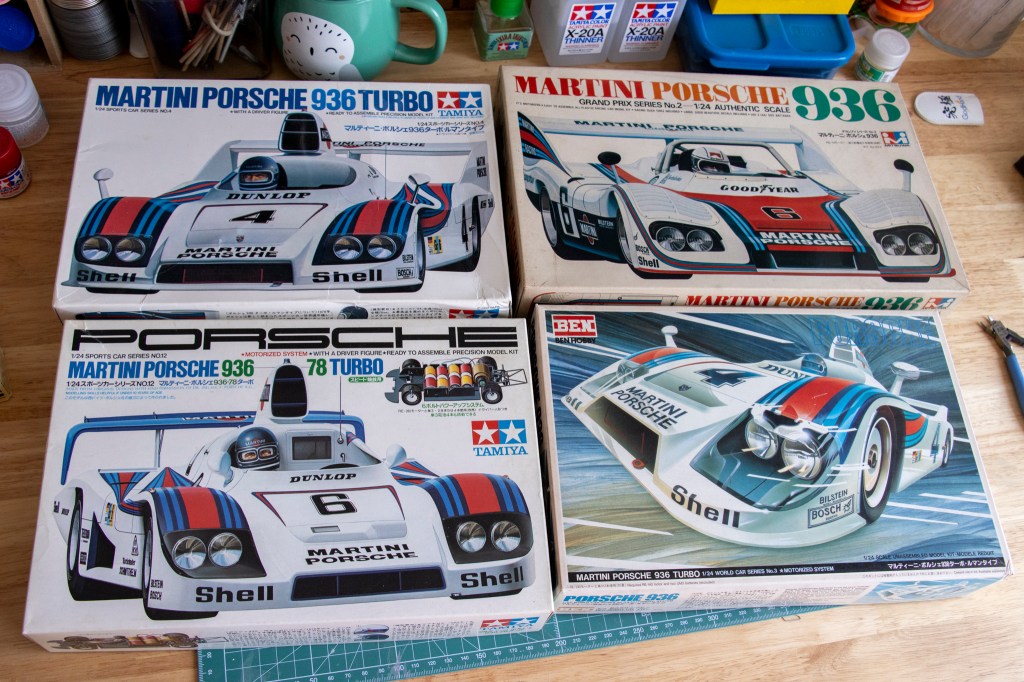
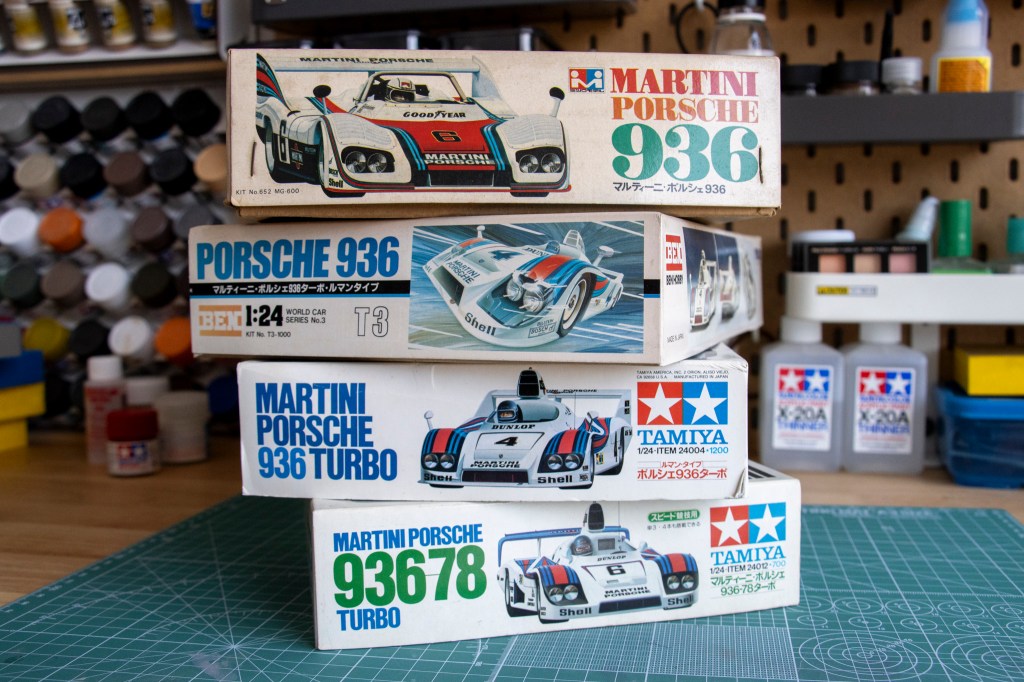
The Porsche 936 collection! From the top left, Tamiya Porsche 936/77; Mitsuwa 936/76; Tamiya Porsche 936/78, and finally BEN Hobby Porsche 936/77.
BEN Hobby? What’s that brand?
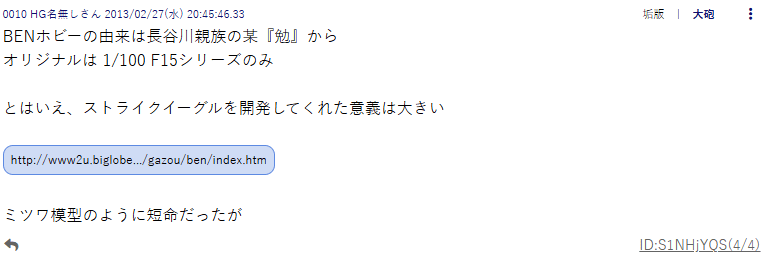
Well, I don’t know how accurate this is… but this friend replied to this in the above forum discussion:
BEN Hobby got its name from a relative of the Hasegawa family whose name is 勉, which sounds BEN (as in the Japanese word Benkyō, 勉強). So basically, this person’s name is BEN, therefore, BEN Hobby.
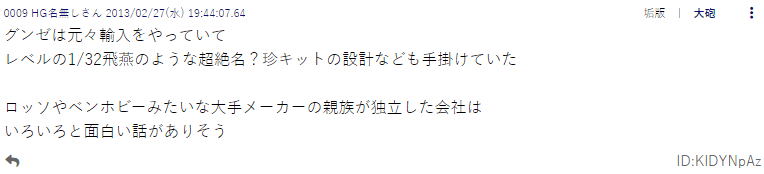
Now this friend (most of the commenters in the post were anonymous users) said that Rosso was the other brand that was created by a family member of a major plastic model manufacturer. He said and here I, oops, I mean ChatGPT, translates:
“ロッソやベンホビーみたいな大手メーカーの親族が独立した会社は
いろいろと面白い話がありそう”
“There seem to be many interesting stories about companies started independently by family members of major manufacturers like Rosso or BEN Hobby”
What are some of Rosso’s goodies? I will slap the 1/12 NSX and the gigantic 1/8 Ferrari 643 on your face, after one day I am lucky(rich) enough to get both of them.
Some rather interesting history lessons, huh?
Hmm…you are now reading this post that was written in the year 2024, and the writer was born in 1993. The heyday of plastic models, according to what I’ve learned and seen, should be from the 60s to the 90s. Over the years, these Japanese companies have gone with the wind…

- マルサン – Marusan
- エルエス – LS
- イマイ – Imai
- ミツワ – Mitsuwa
- サンワ – Sanwa
- オオタキ – Otaki
- ミドリ – Midori
- 三共 – Sankyo
- 東京プラモ – Tokyo Plamo
- 東京シャープ – Tokyo Sharp
- 東宝模型 – Toho Model
- 山田模型 – Yamada Model
- 日本ホビー – Nippon Hobby
- 日東科学 – Nitto
- にしきや – Nishikiya
- don’t forget Nishimo – added by me
On this list, you do see some big names – Otaki, Nitto, LS, definitely Nishimo… But they have all gone under the bed. Plus one of our buddies today – Mitsuwa. And before you ask, yes, I haven’t explained this specific line because I’m kinda waiting for this moment:

“Although (BEN Hobby) is just as short-lived as Mitsuwa Model.” Boy oh boy, these two poor brothers…and two of their works will be reviewed below.
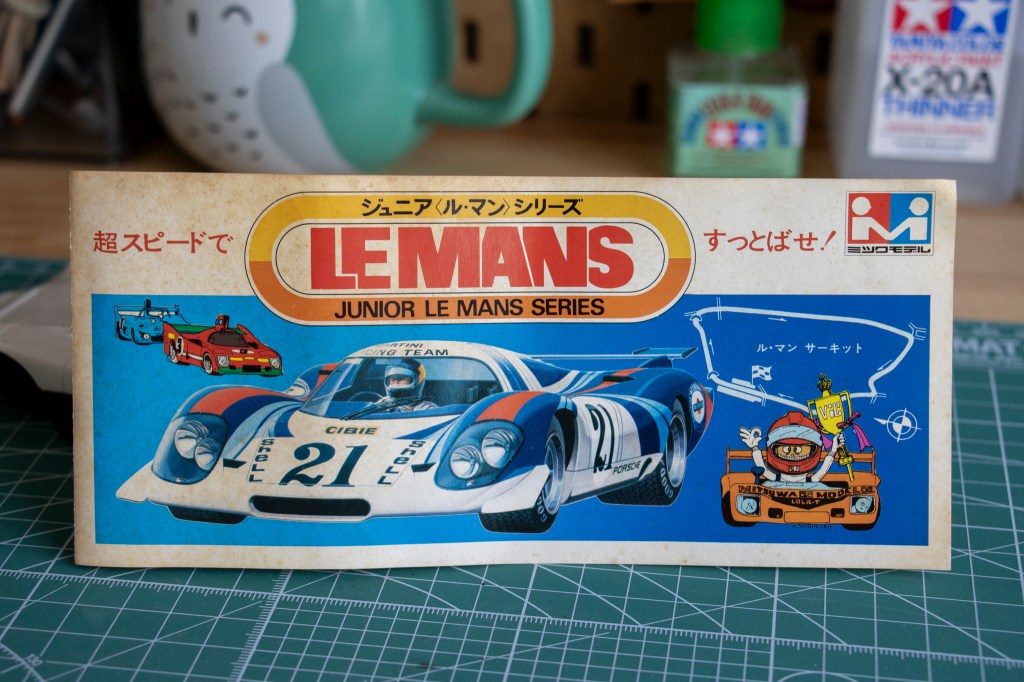
Also comes within the box a little promotional brochure, the 1/28 Junior Le Mans Series.
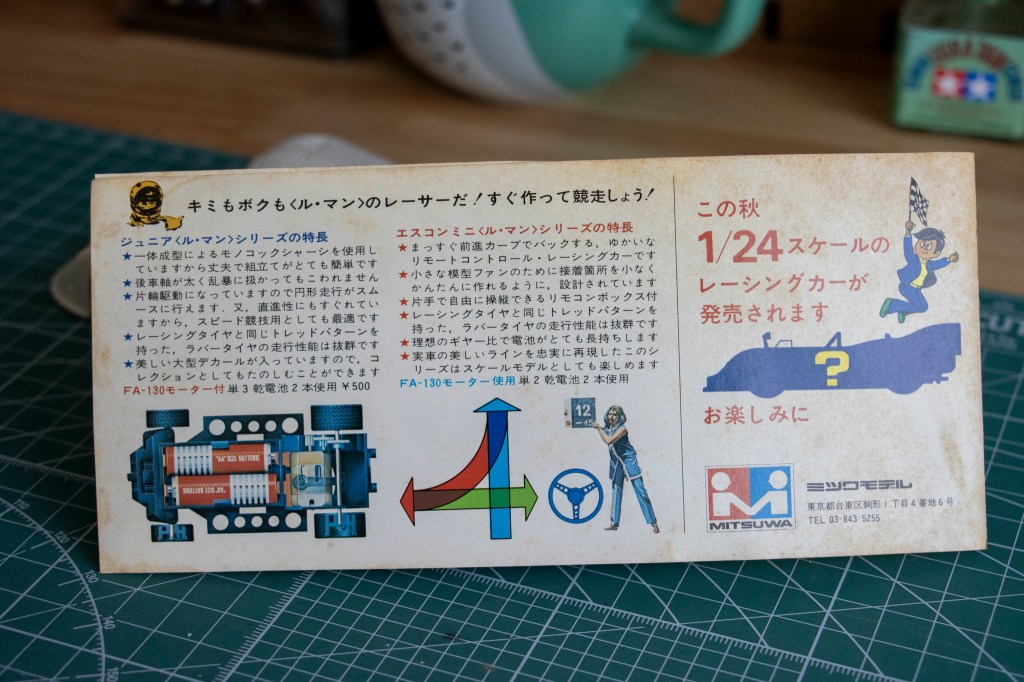
They are not exactly those 4WD racers. That “WHO’S THAT POKEMON” image is…
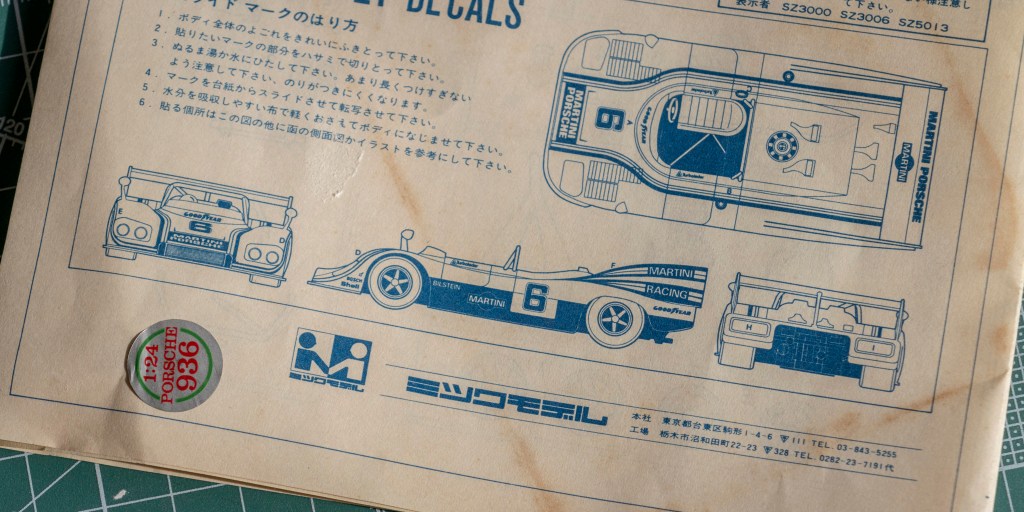
Just this very Porsche 936! This ad was a bit outdated. Weird…
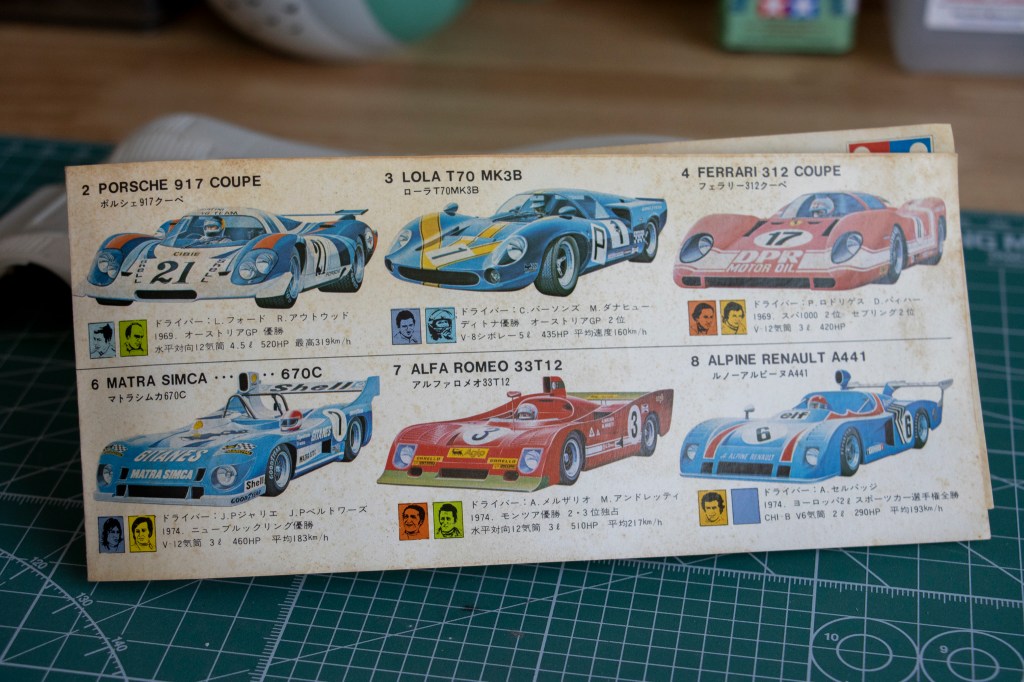
Quite a few selections for the 1/28 Junior racers, eh? I wish so much that there’s a plastic 1/24 version for the Matra and Alfa Romeo.
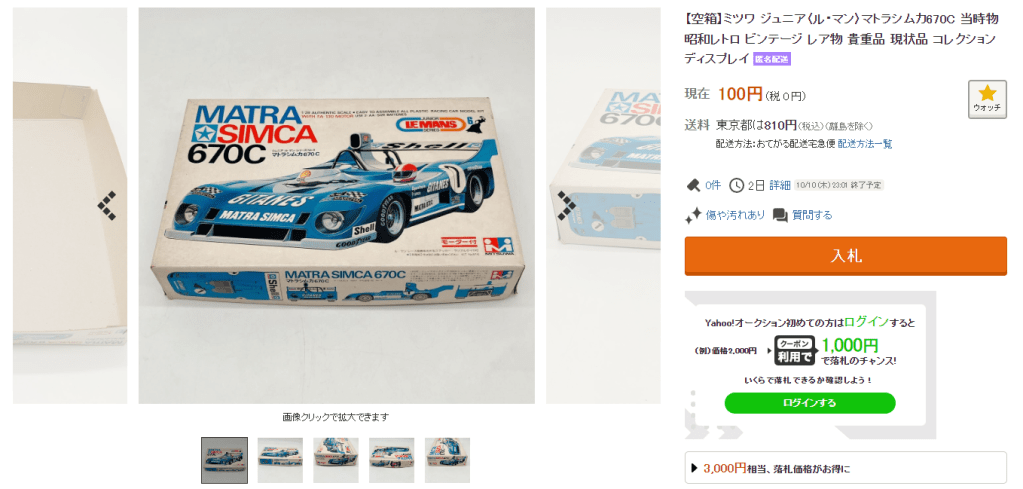
How about 100 Japanese Yen, or 1 maple coin for the empty box?
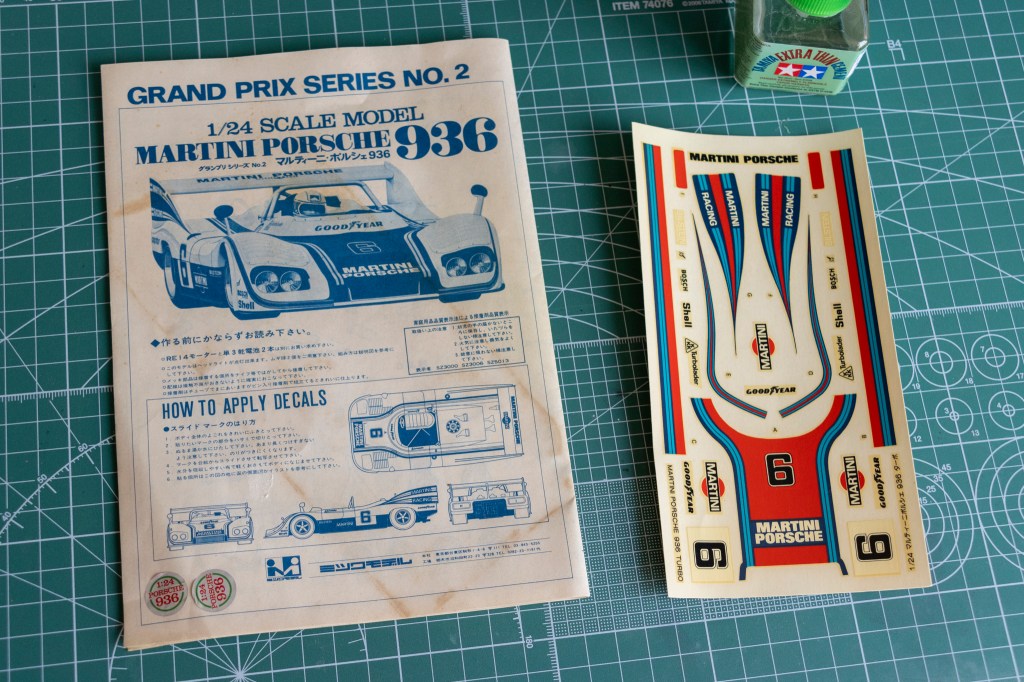
You’d probably figured that the silhouette comes from the instruction manual. Over the years, the decal paper stained the instruction with a brown mark.
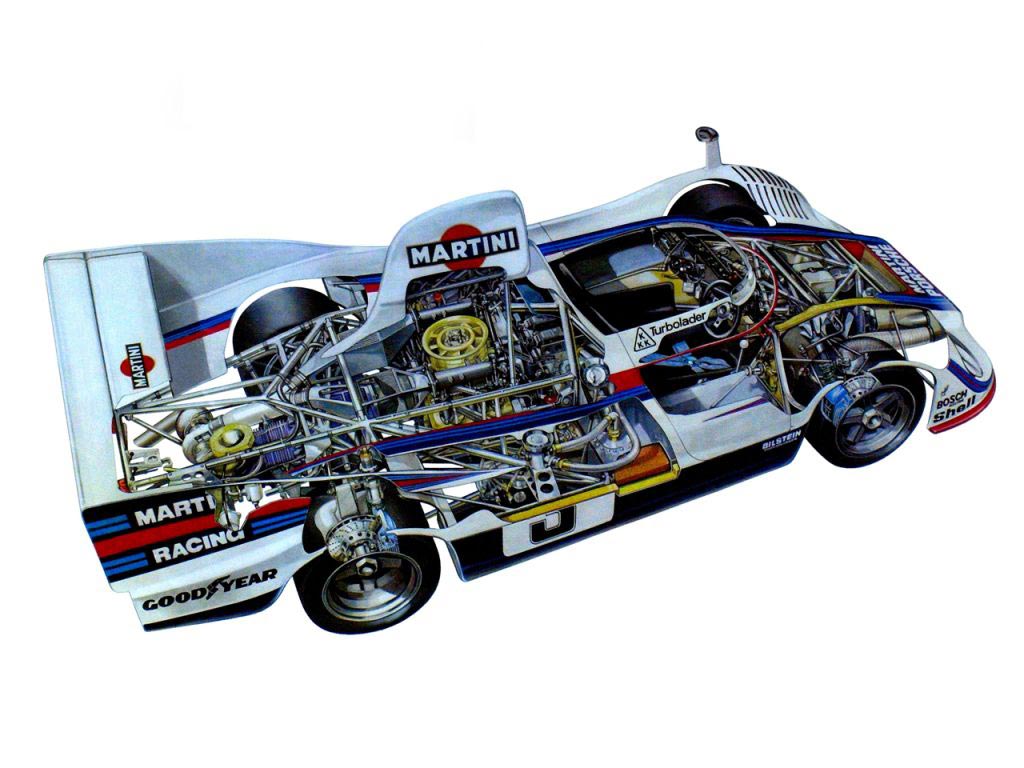
And this is probably the best place for me to start my history lesson – The mighty Porsche 936. There is the 936 they raced in 1976, which they won at Le Mans, and then another one in 1977, which led to another victory at La Sarthe, yet another one in 1978, which was lost to Renault-alpine in that year, and to “repeated flat tires” in the following year. The 936s were not on the list in 1980, but they stormed back in 1981 with a new engine and Dior (Jules) to eventually win Le Mans again. The next year, the letter C was added to the 936s, marking the beginning of a glorious era of racing history. And a roof – the close-cockpit 936C.
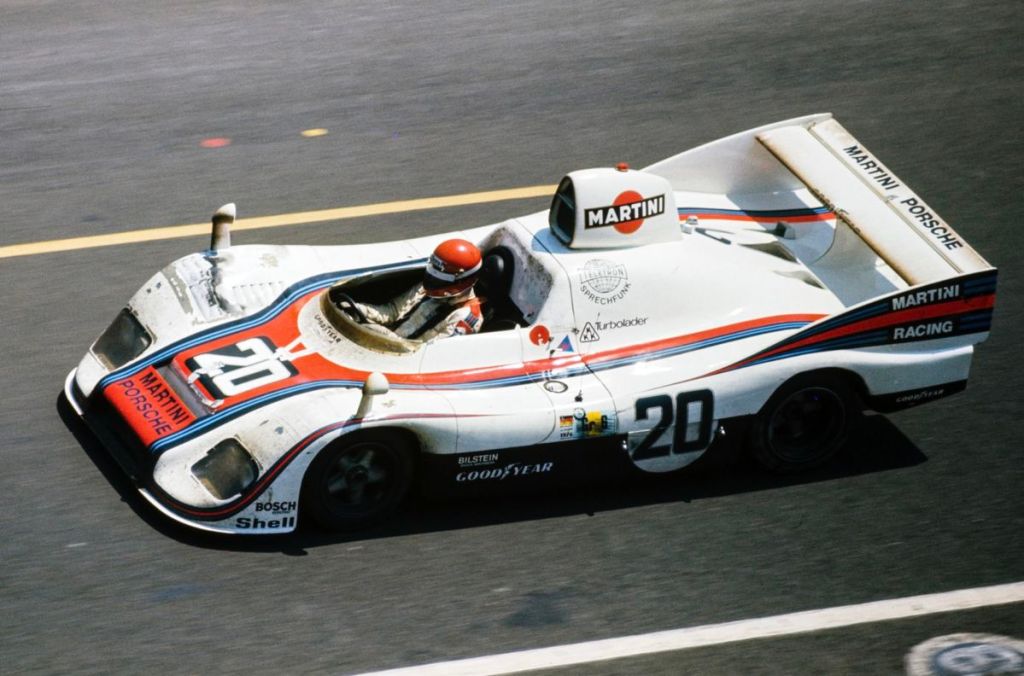
(936/76, Photo Credit: Bisciooone, Pinterest)
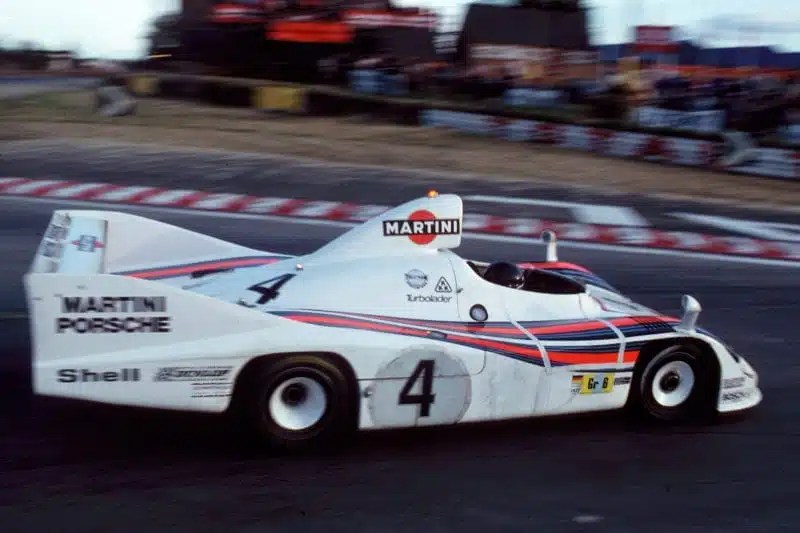
(936/77, Photo Credit: Motorsport Magazine)
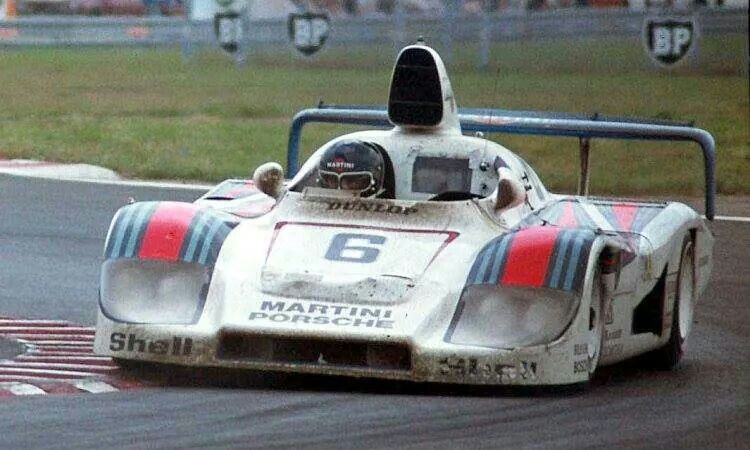
(936/78, Photo Credit: MARCO CALDERÓN, Pinterest)
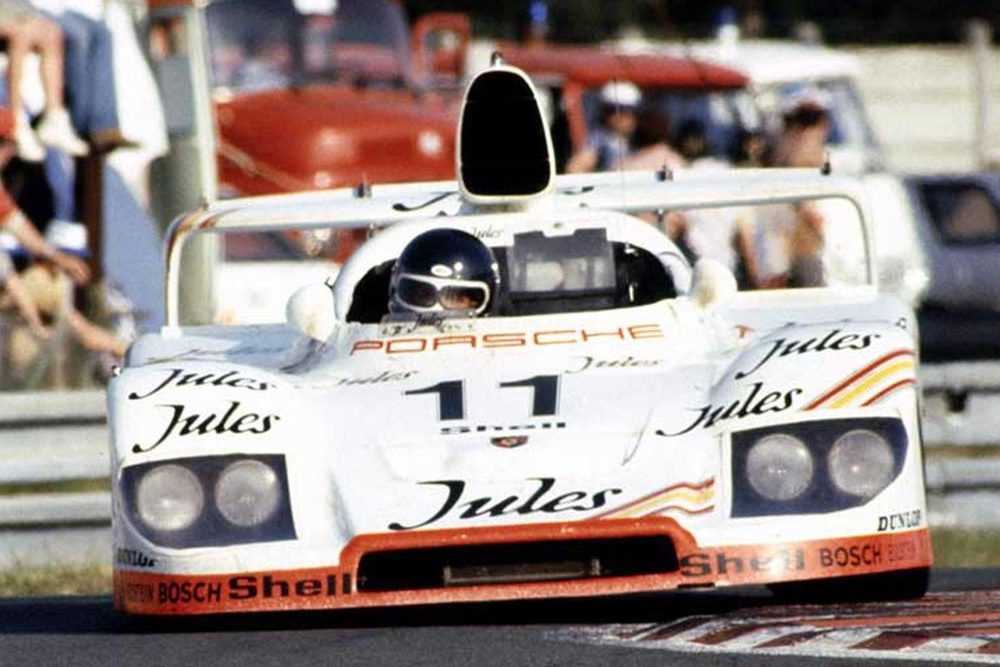
((936/81, Photo Credit: Jim Roller, Historic Racing News)
Racing legend Jacky Ickx was behind the wheel in these 936s every time and has won three out of their fifth Le Mans attempts from 1976 to 1981 – half of his total Le Mans victories.
Porsche published a very nice video they made to celebrate Jacky’s 70th birthday with Belgian legend cyclist Eddy Merckx. My favourite 936, 936/77, was featured in this video. Enjoy.
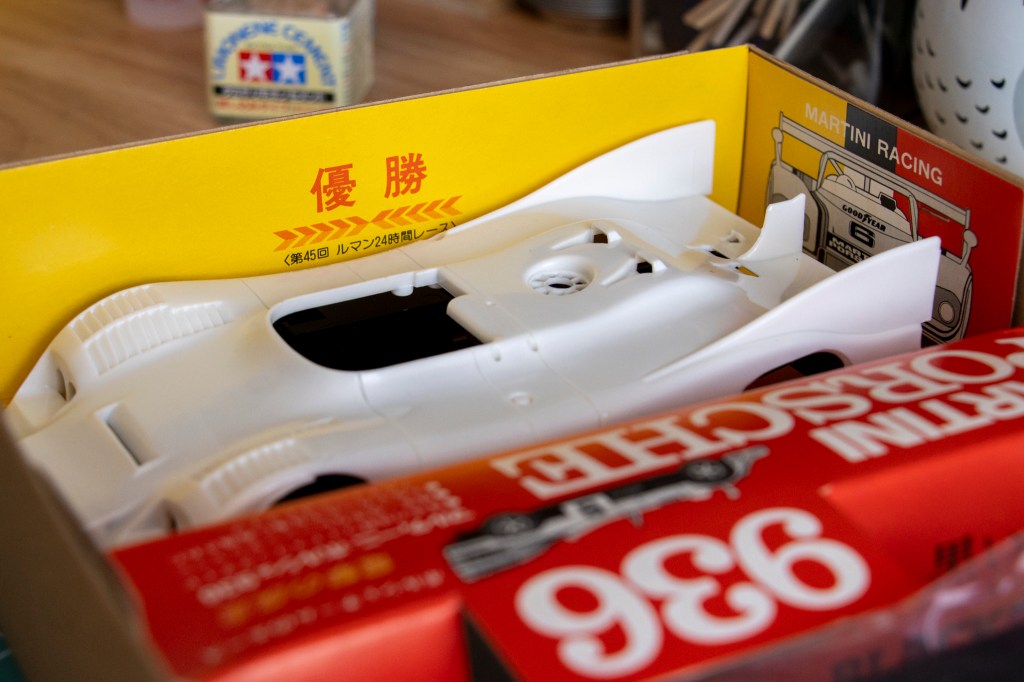
The body and chassis combination is nicely placed in a well-organized box. The Japanese letters on it say, “Winner – the 45th Le Mans 24 Hours.” But Larry, this 936 looks…different?
The early 936/76 did not have the high airbox.
It was actually black in its debut, which I believe, led to the nickname “black widow.” It was matte black!
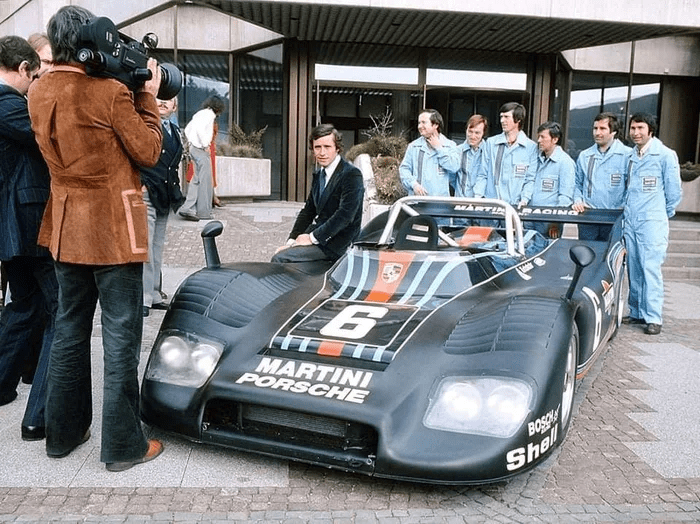
(Photo Credit: nenentetten, 9GAG)
This is a photo of Jacky Ickx at the introduction of Porsche 936 #001 Black Widow in 1976. I cry – imagine you don’t have to polish – if the decals you get are not horribly thick.
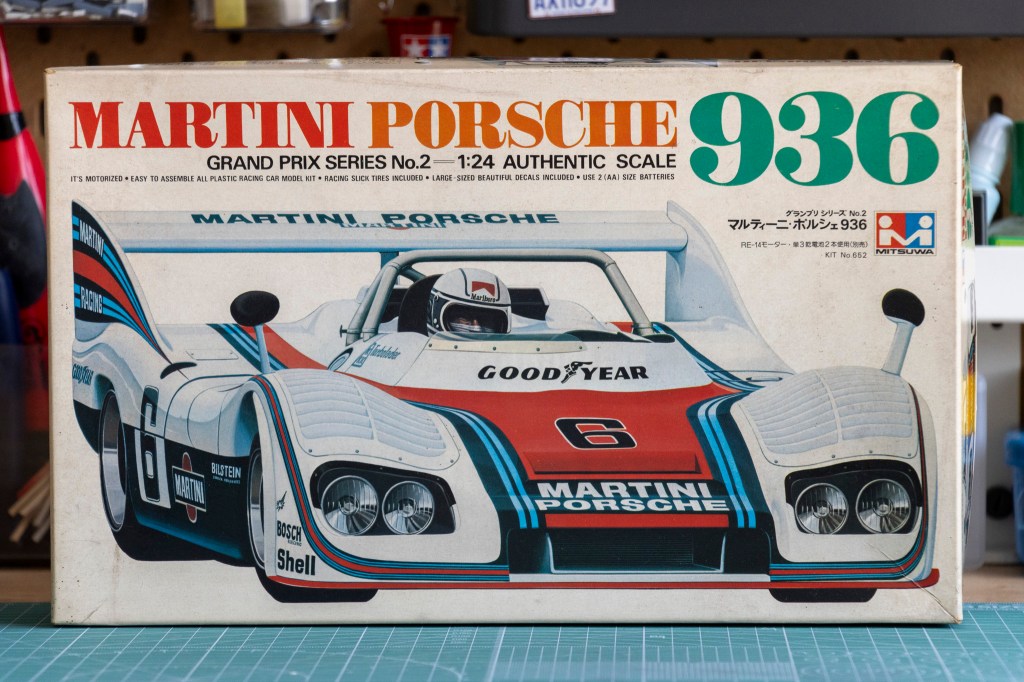
Guess what? The later white 936 was the No. 2 car Mitsuwa produced in their Grand Prix Series. So…what was the “Grand Prix Series No. 1?”
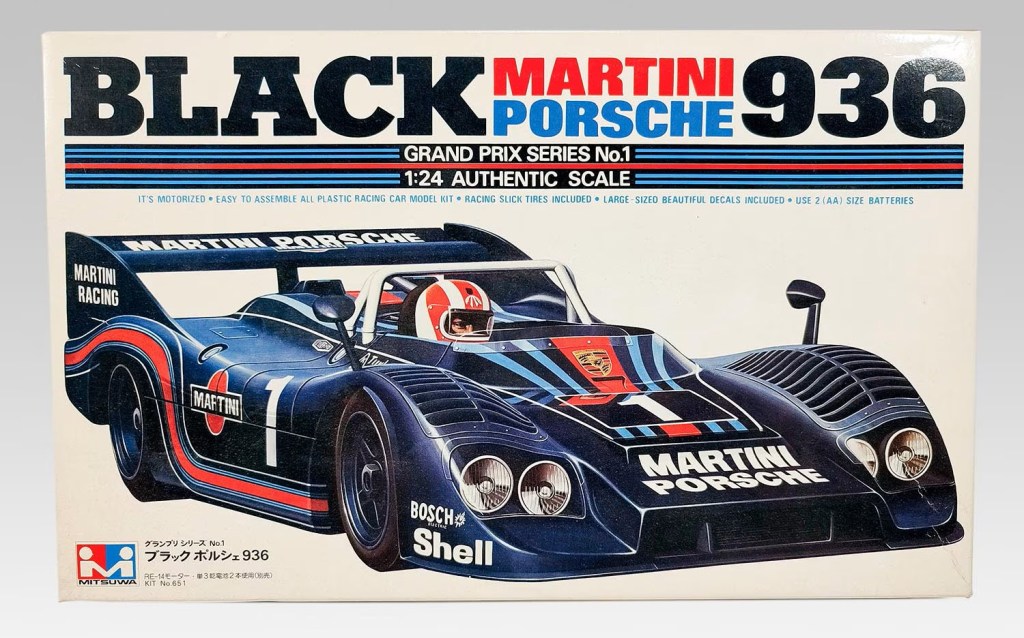
(Photo Credit: Mandarake)
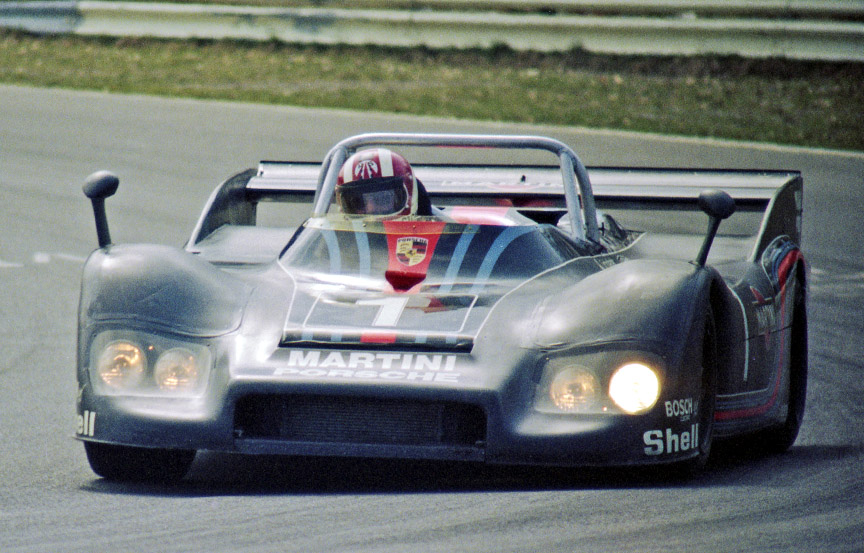
(Photo Credit: Stuttcars)
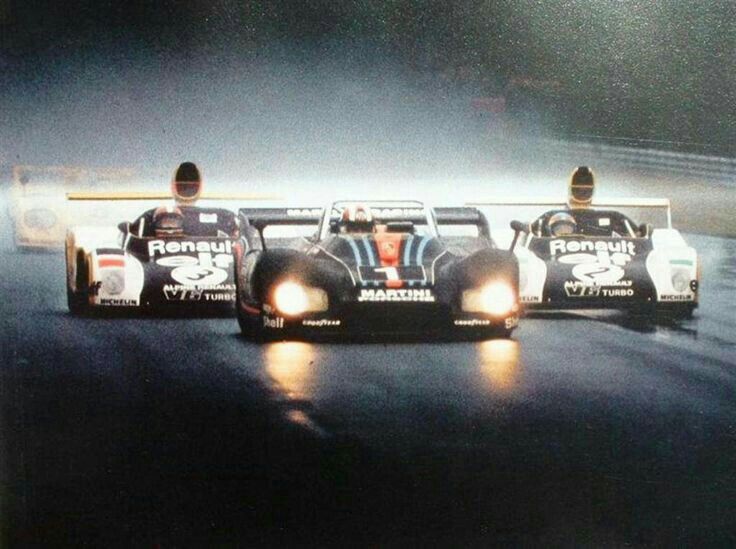
(Photo Credit: The year of the automobile)
This is such a cool photo. Two Renaults chasing the leading black widow. Whoa! And, boy oh boy, researching the black widow has led me to this jaw-dropping story from Motorsport-info.de, titled Porsche 936 – eigentlich wollte ihn Porsche nicht! (Porsche 936 – Porsche didn’t actually want it!)
“Stommelen führte das Rennen bis zur 6. Runde an, dann mußte er mit einem klemmenden Gaszug zur Box. Sein Gasschieber blieb auf einer 3/4-Offen-Stellung stehen. Normalerweise wäre das Rennen für den 936 beendet gewesen. Angesichts des kurzen Rennens lohnte ein Wechsel des Gaszuges nicht. Also wurde Rolf wieder auf die Strecke geschickt. Er fuhr den Wagen mit dem Hauptstromschalter. Vor den Kurven Strom (und damit auch der Motor) aus, danach Strom wieder ein und Vollgas. Kaum einer mag wirklich beurteilen können, welche gigantische fahrerische Leistung Rolf ablieferte.”
“(ChatGPTed) Stommelen led the race until the 6th lap, then had to pit due to a jammed throttle cable. His throttle slide was stuck at a 3/4-open position. Normally, this would have meant the end of the race for the 936. Given the short length of the race, it wasn’t worth replacing the throttle cable. So, Rolf was sent back out onto the track. He drove the car using the master switch: before the corners, he would cut the power (and with it, the engine), then turn it back on and go full throttle afterward. Hardly anyone can truly grasp the incredible driving skill Rolf displayed.”
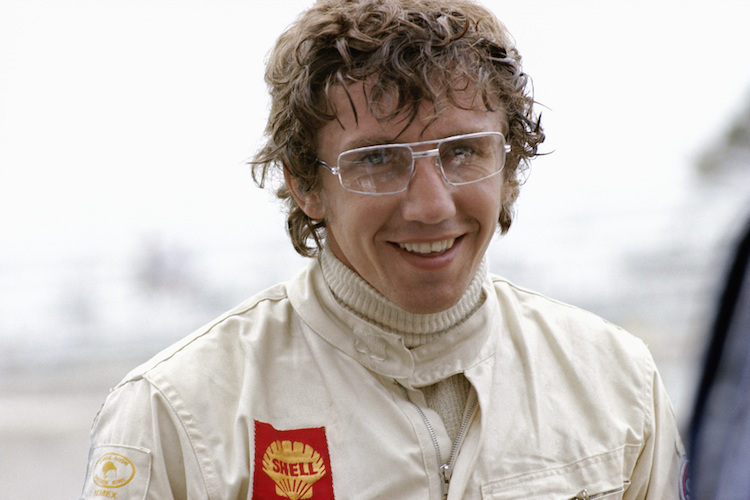
(Photo Credit: LAT, Speedweek.com)
Yeah, he kind of short-lived, but people will never forget his handsome smile, glasses, his incredible driving skills, and his fucking gigantic balls.
The driver in Mistuwa’s black widow 936 box art is Rolf Stommelen; Jochen Mass in the white one.

So, two early 1976 936s, huh? Mitsuwa’s two offers are exactly early plastic models, attempting to motorize their product to bring smiles to kids’ faces yet maintain an authentic and accurate level of detail for older age groups who enjoy shelf-queen scale models.
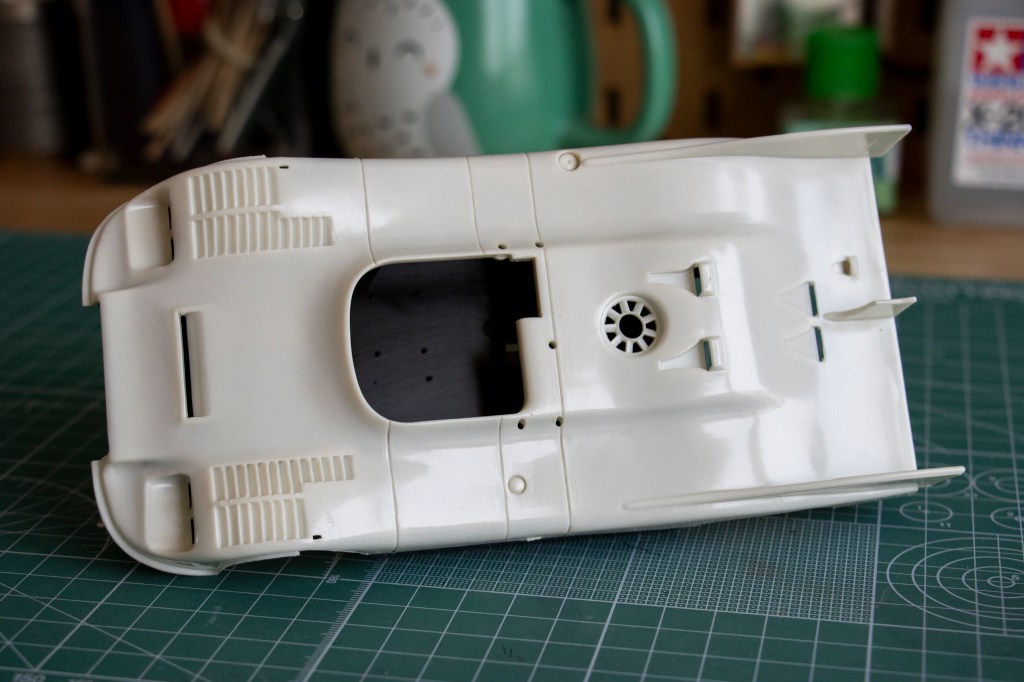
Start with the body, a beautiful body it is! And fairly detailed. Front vents (you have to manually cut them open), NACA ducts, and particularly the front lip and two front wheel arch flaps, are all moulded into this one-piece plastic body. The oil caps are very simply depicted here, though.
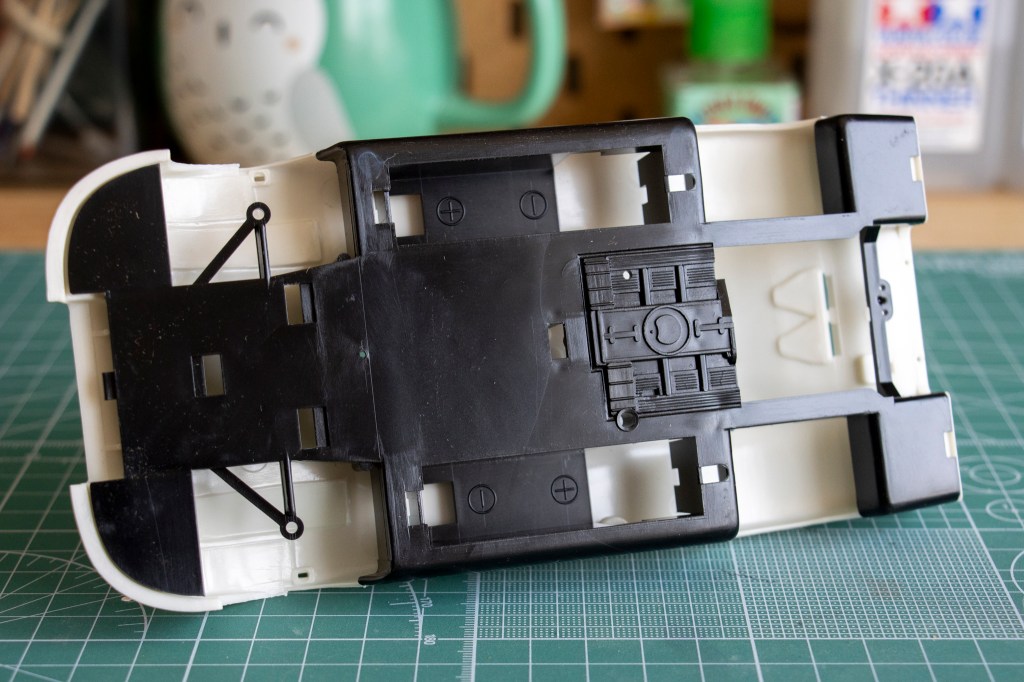
Well, you should not expect much on the chassis of a vintage motorized kit anyway. You do get a decent amount engine details here – if you choose to flip over the car and check the bottom.
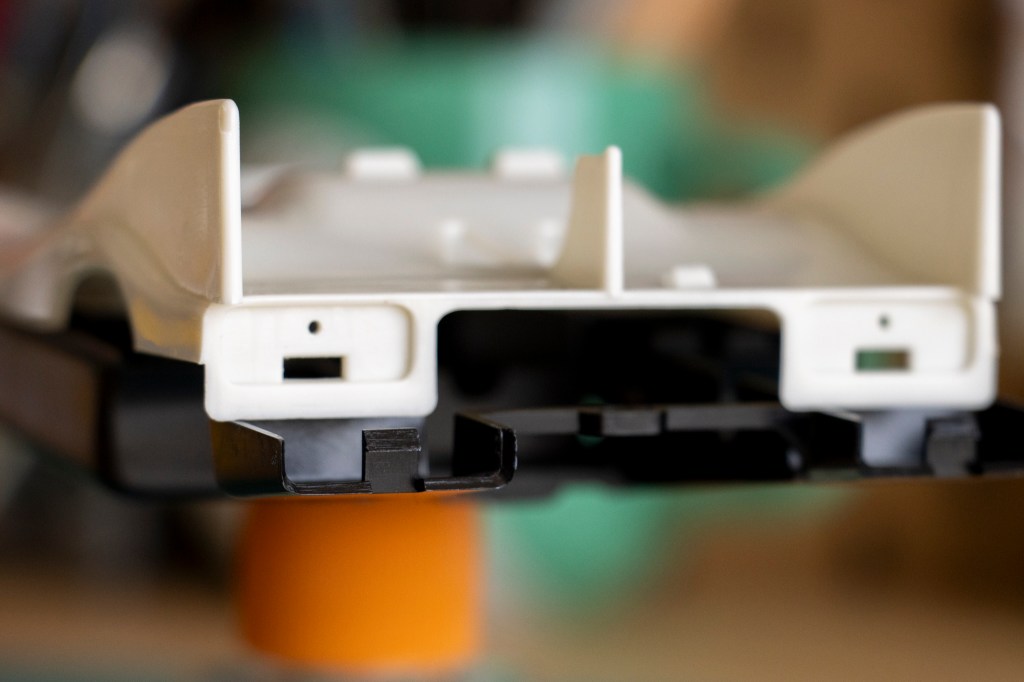

How the chassis attaches to the body is the old-fashioned snap n’ lock way. The snappers will be cleverly covered by brake lights.
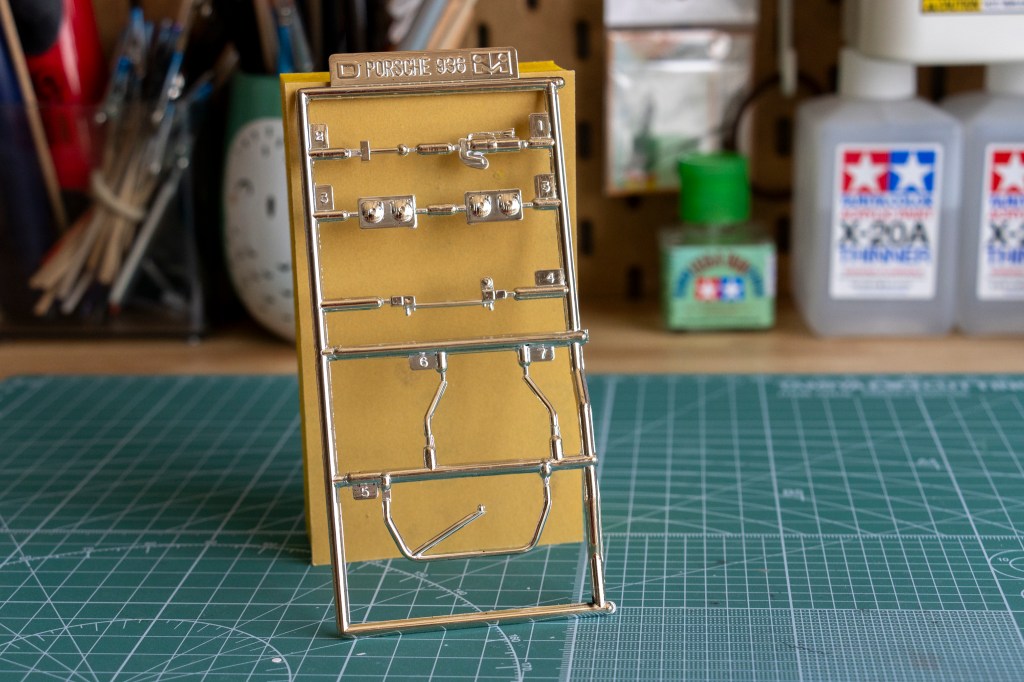
Sprue D is lovely chrome plated.
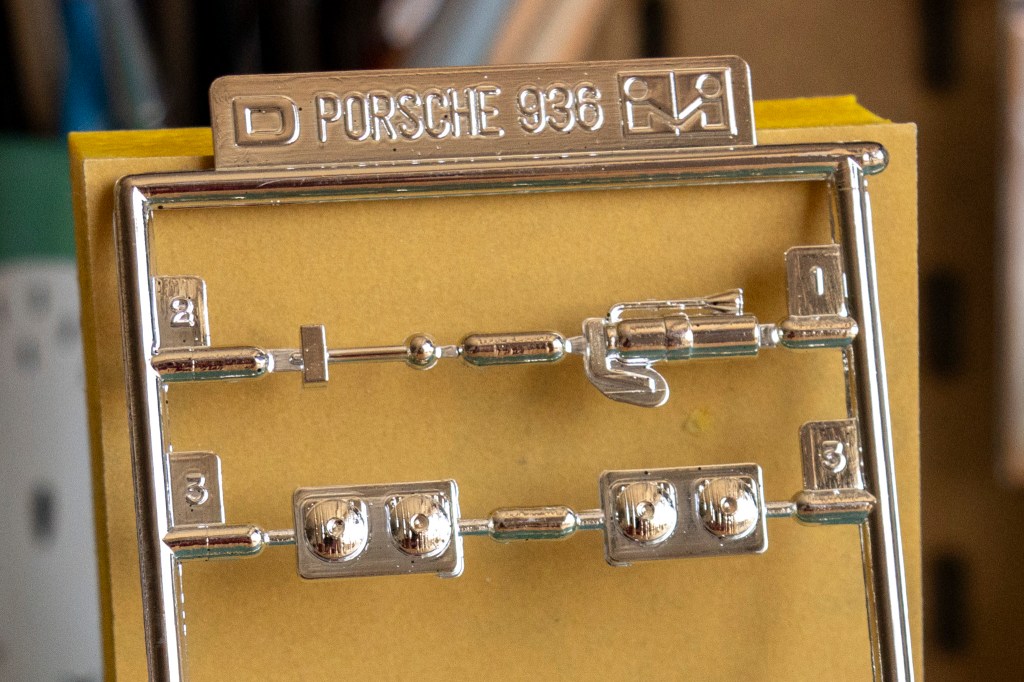
A fire extinguisher with some crazy flash is provided.
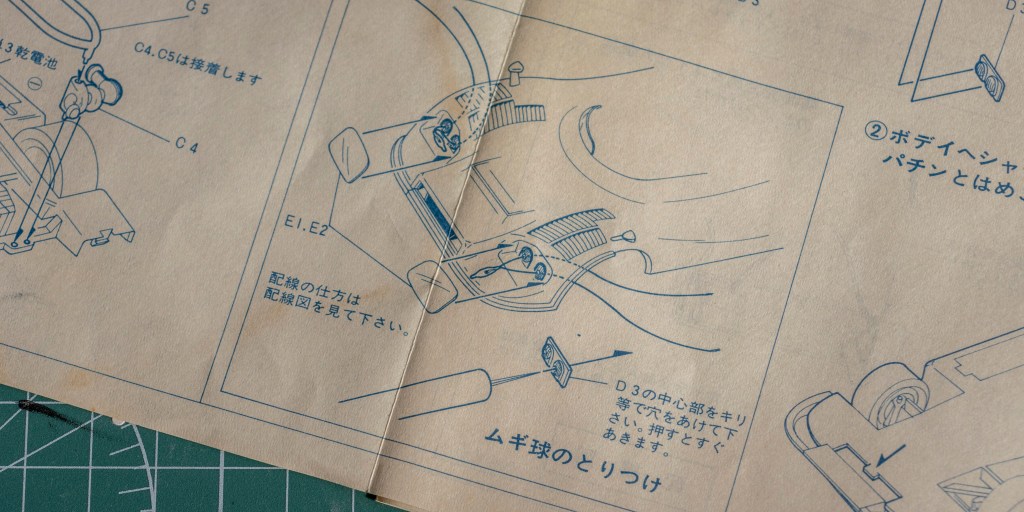
Mitsuwa recommends you drill the headlight parts to allow the cable to go through. I imagine back then there were no micro LED bulbs, so you’d do something shown in the instruction manual – the light bulb is literally hanging in front of the headlight parts…Well, you get the idea from the above photo.
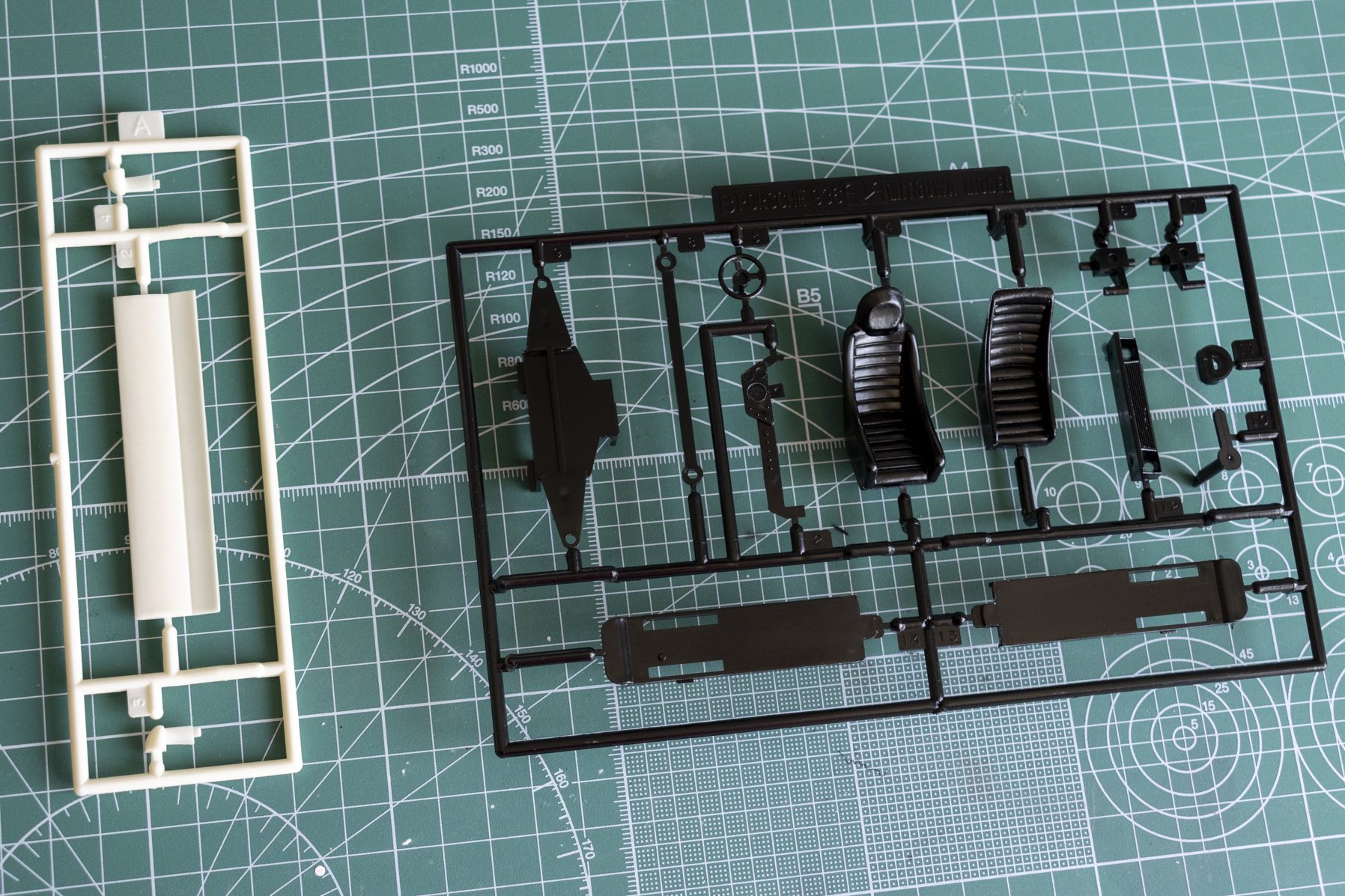
Sprue A, a rear wing piece and two rear mirrors; and sprue B, some mechanical and interior parts.
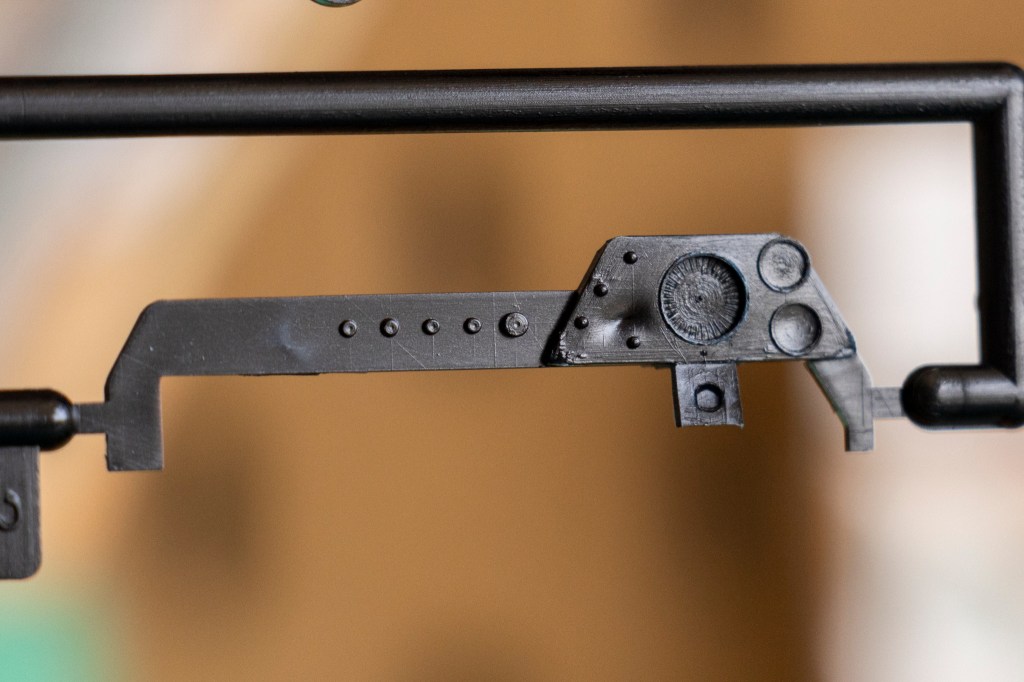
Unfortunately, no gauge decals are provided. Well, time to use my imagination!
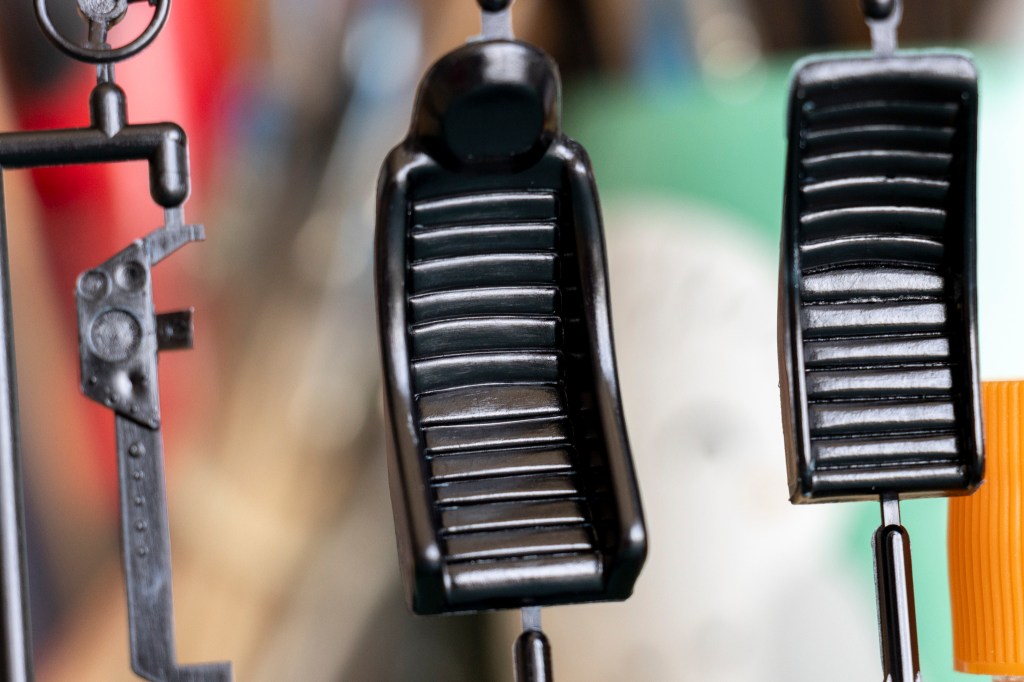
Pretty basic seats.
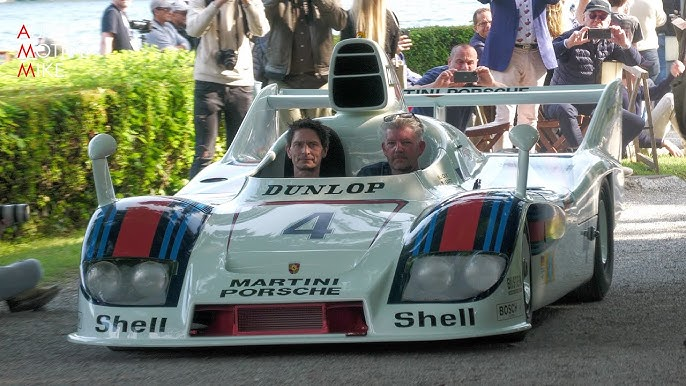
(Photo Credit: Goodwood Road & Racing)
Yes, sit with your best friend. I should just steal their video and post it here:

Remember this is largely a motorized 2WD toy. A gearbox and some exhaust pipes are supplied to make the toy look not so toyish.
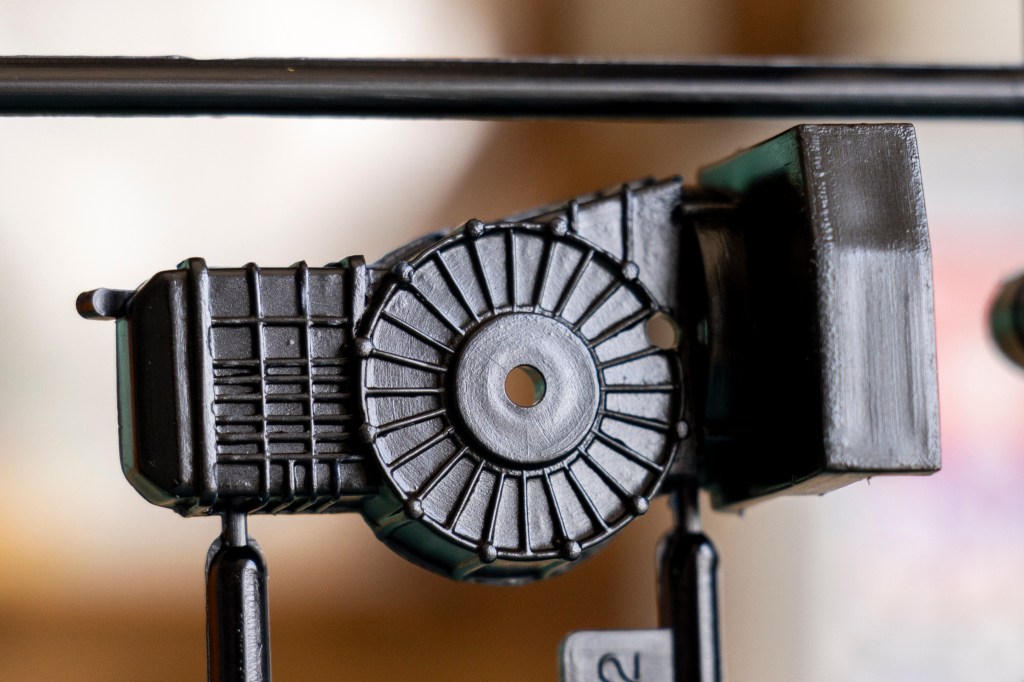
The moulding quality is good enough. Don’t think it is accurate at all…
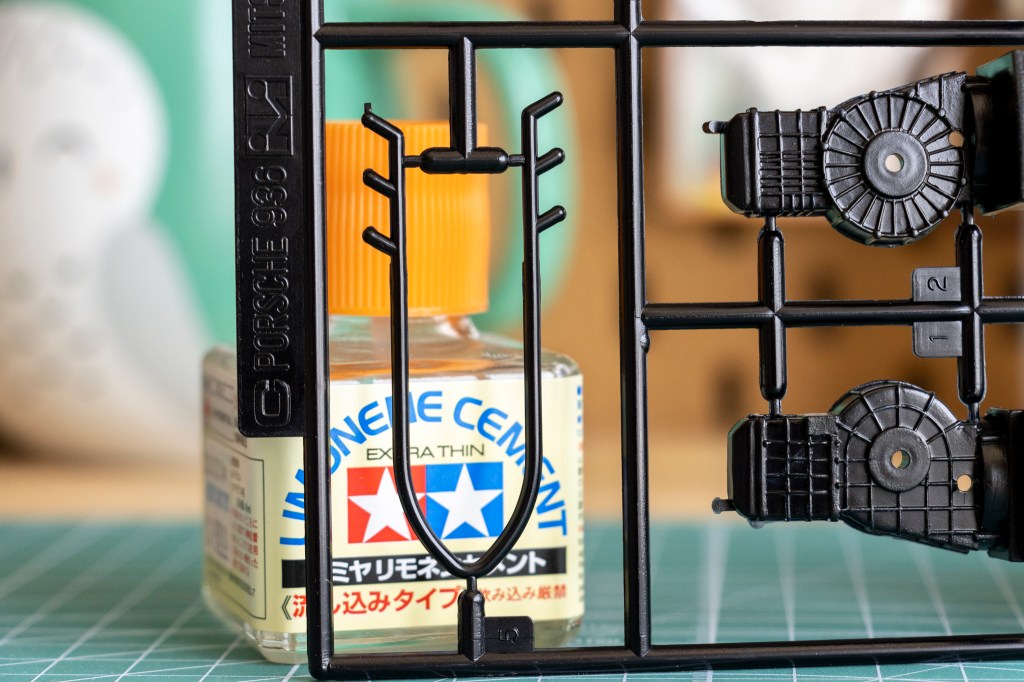
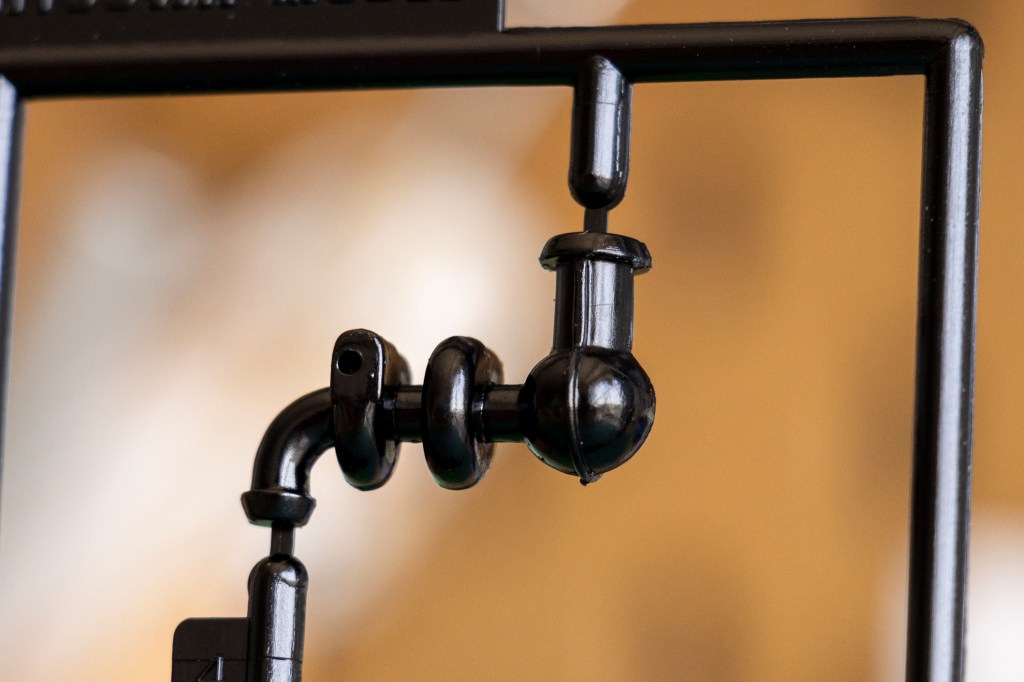
I believe this is a single turbo? The addition of these parts will make the butt of your Mitsuwa 936 look, well, how can I put this…certainly, far from the real thing:
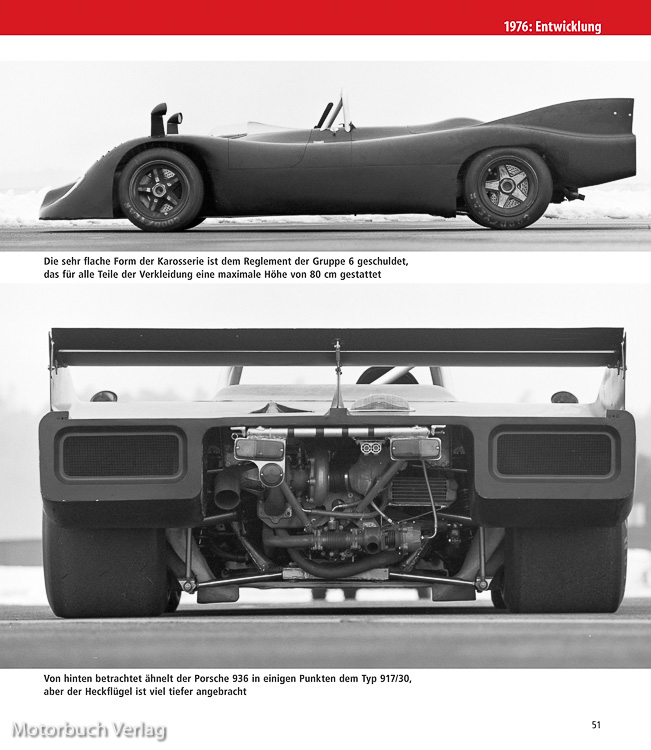
(Photo Credit: Glen Smale, Stuttcars)
But definitely better than nothing.
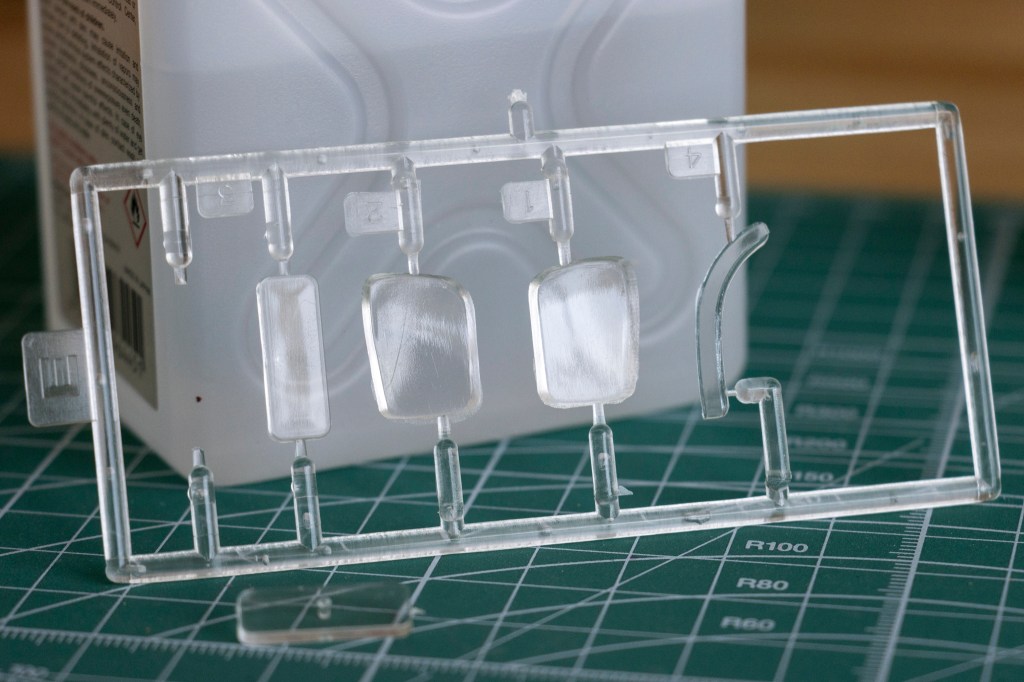
The headlight clear parts look awfully thick. The little windshield is included.
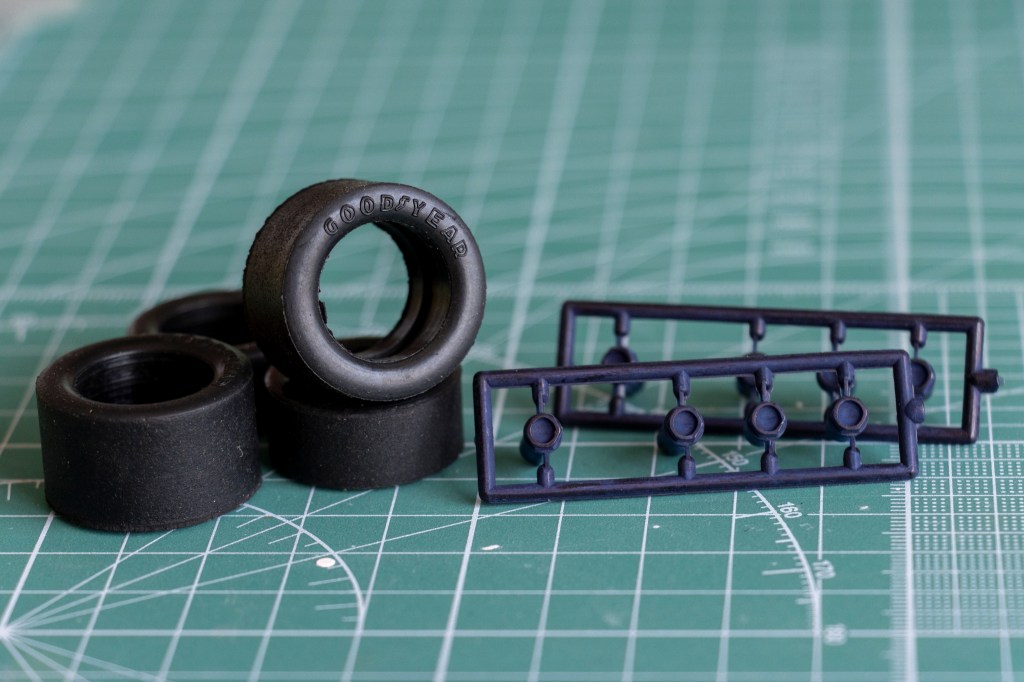
The kit tyres are pretty, pretty good. Keep reading and I will do a comparison between these tyres and Tamiya’s offering. The lug nuts on the right side have some surpluses, make sure you use the right ones according to the instruction manuals.

And that’s almost everything you get from this simple kit! I like that there is a well-organized part list in the manual.
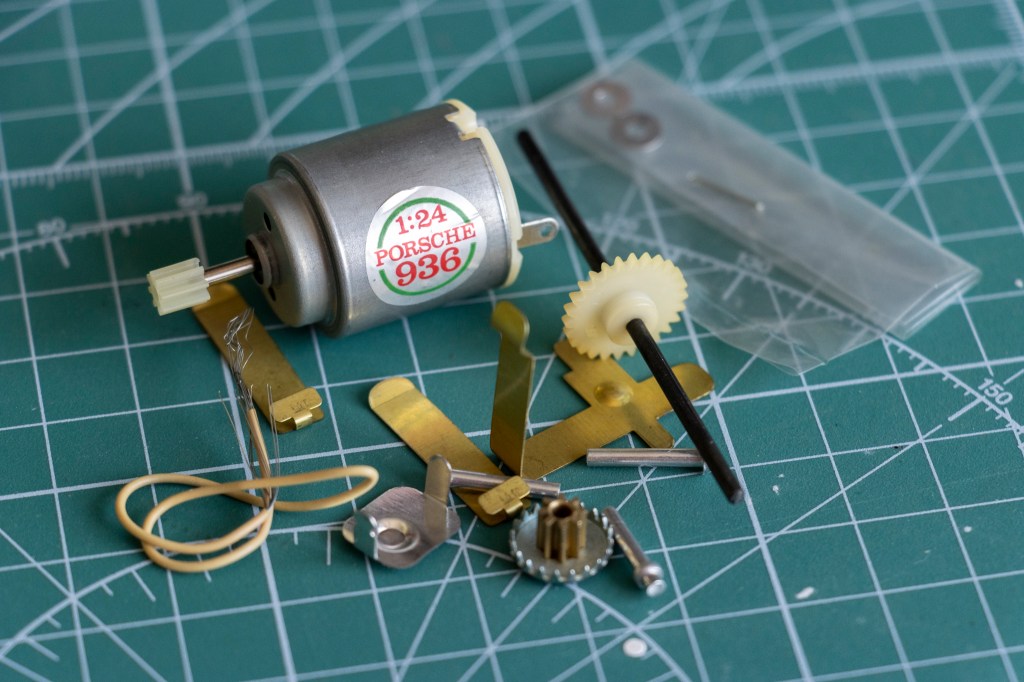
This Mitsuwa 936 does not come with a motor, at least this very box I received. Mitsuwa recommends a Mabuchi RE-14 motor. The old Tamiya 936/78 kit that travelled thousands of kilometers to my home, however, has a Mabuchi RE-260 motor to offer. Do you see that big, round, silver sticker? These stickers were originally placed on the car body, like such:
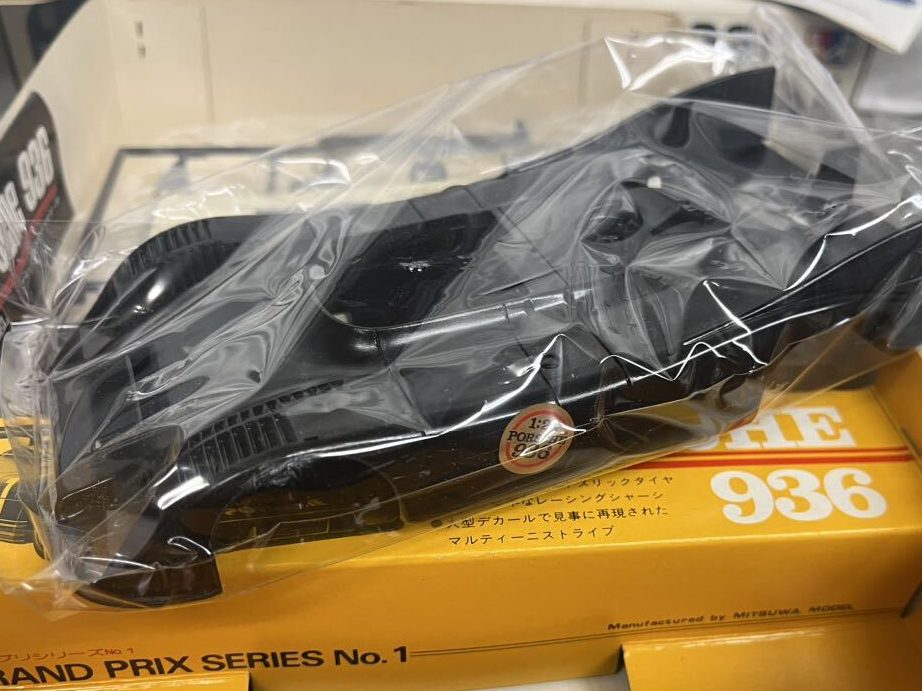
(Photo Credit: Yahoo! JAPAN Auction)
Someone like me – who has zero patience to check the instruction manual before checking out each part – would pretty naturally assume these two shinning stickers are just decoration or part of the packaging. Phew, glad I did not just throw the stickers away…Discard this if you don’t care about the motorized part of this kit and just want to build it into a display model.
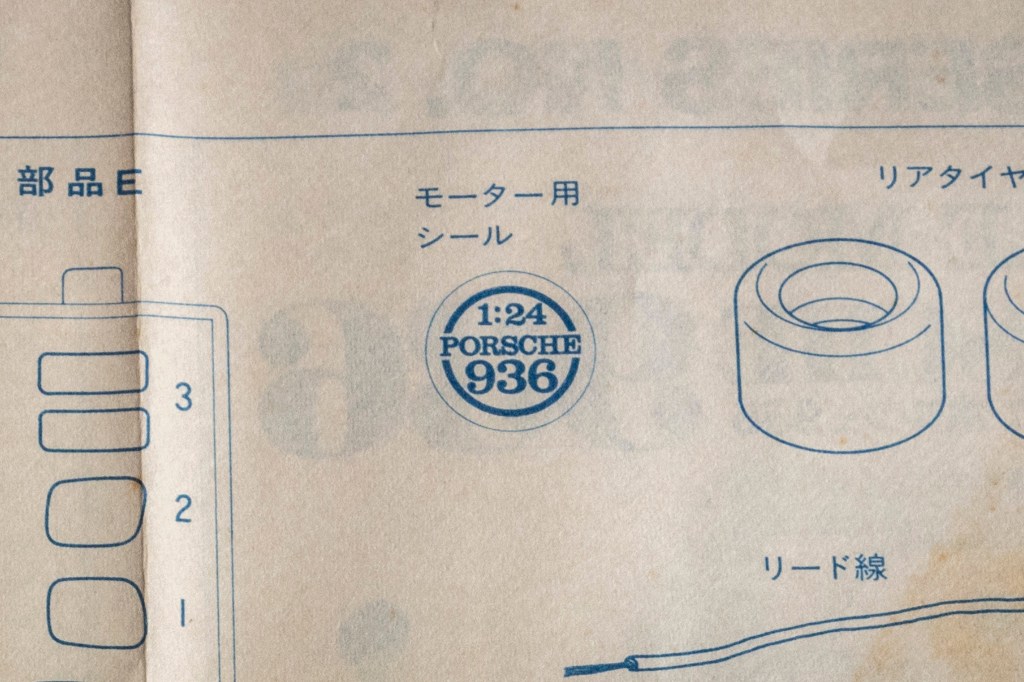
These stickers are even depicted in the instruction manual. “モーター用シール” means “Seal for Motor.” How you use it –
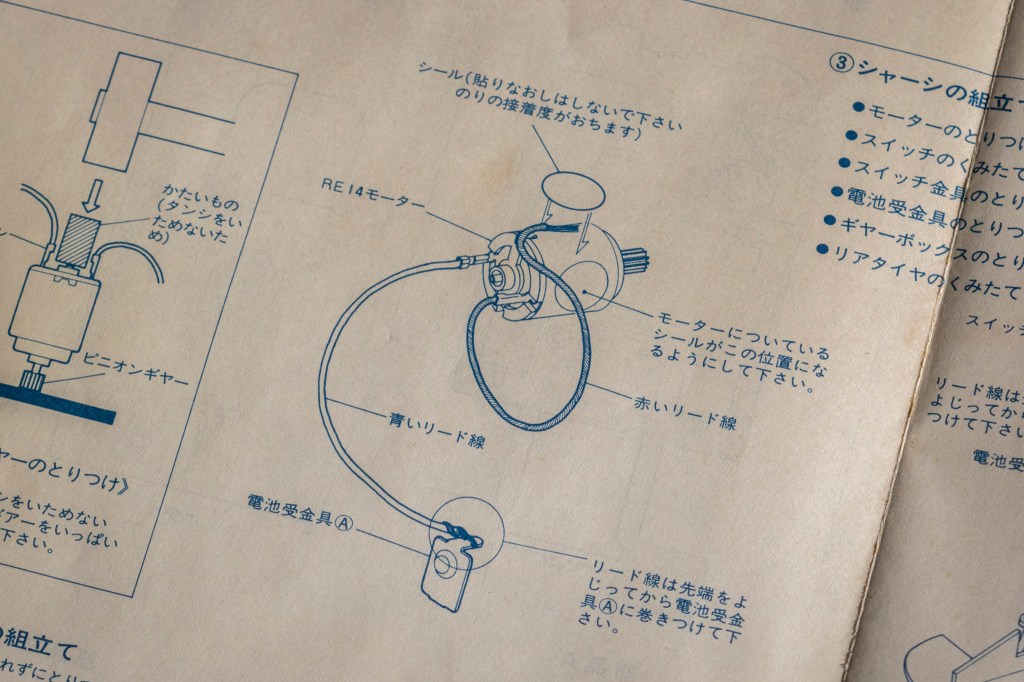
Use the stickers to seal the wire to the body of the motor.
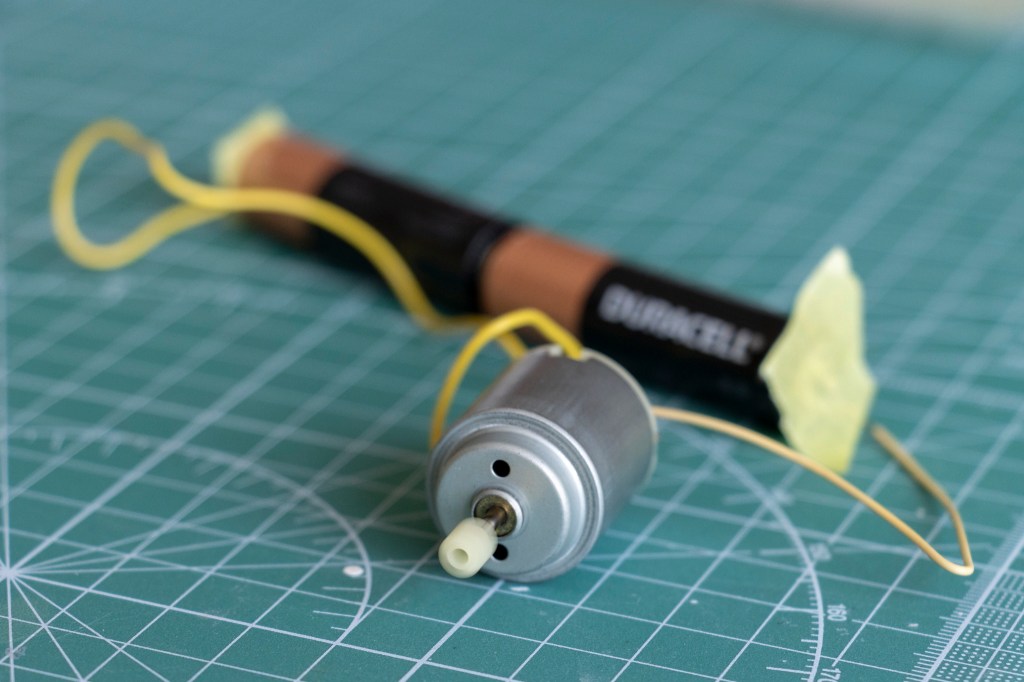
Ha, runs like a champ! Ah, the engineering knowledge I learned from summer camp refreshes like new! These Mabuchi motors are still available online these days for purchase – if you are not satisfied enough with static display models.
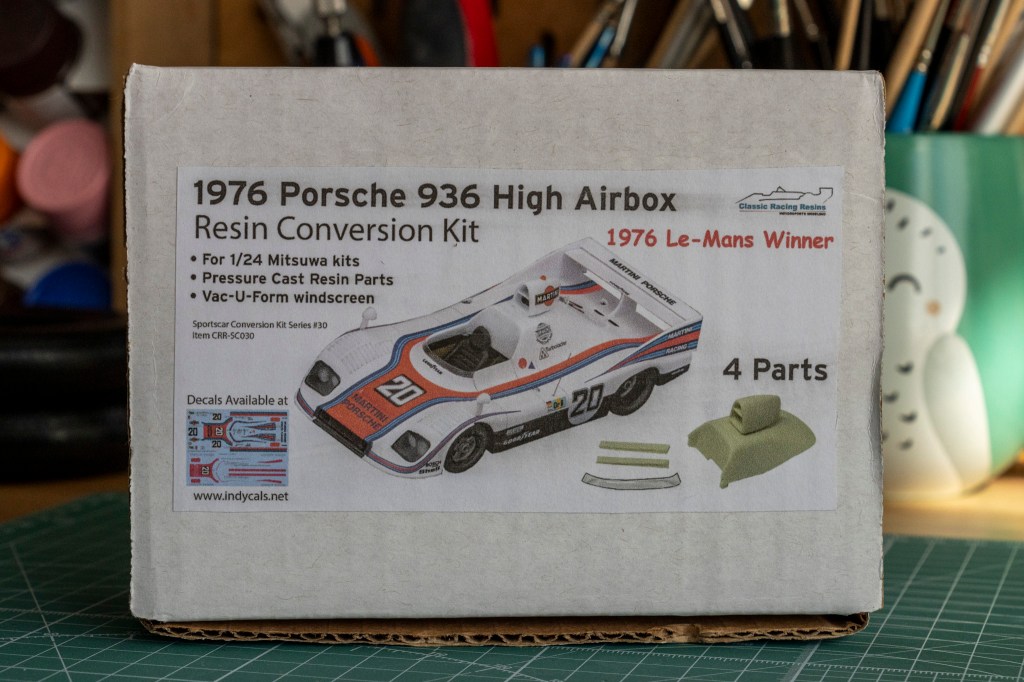
Classic Racing Resins did this 4-part conversion kit so you can turn your Mitsuwa early 936 into the car that won the 1976 24 Hours of Le Mans. The corresponding decal set can be found on Indycals. The other option for this winner will have to be the resin kit from Renaissance.
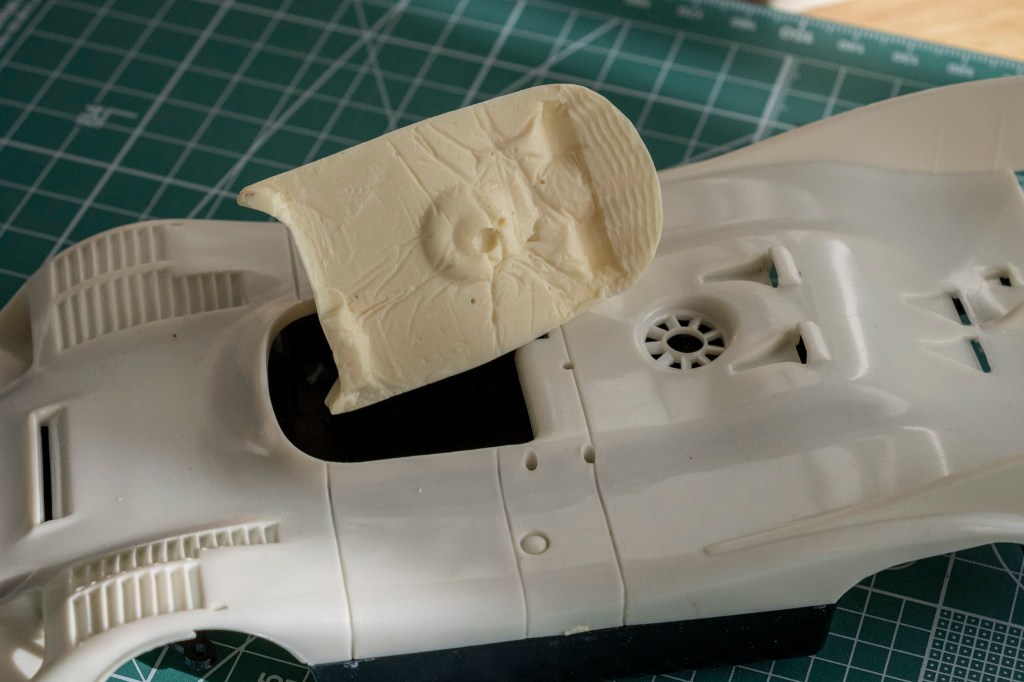
Garage kits get their names for a reason. They are usually pretty basic.
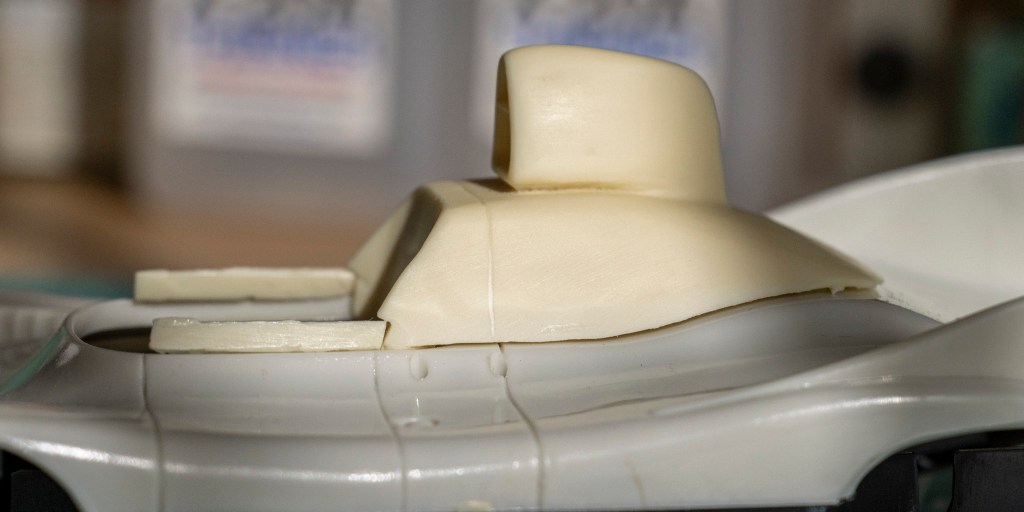
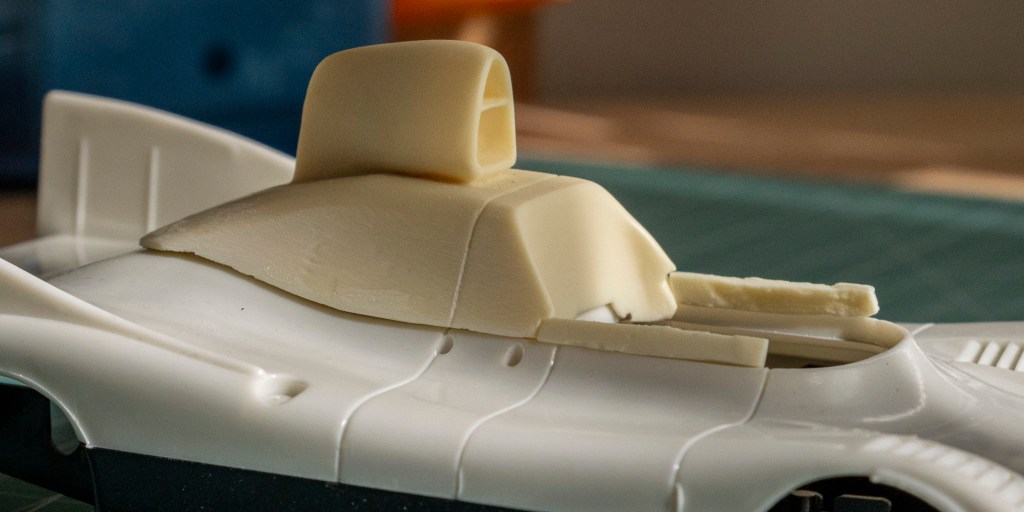
A lot of work is needed to cleanup these three resin parts.
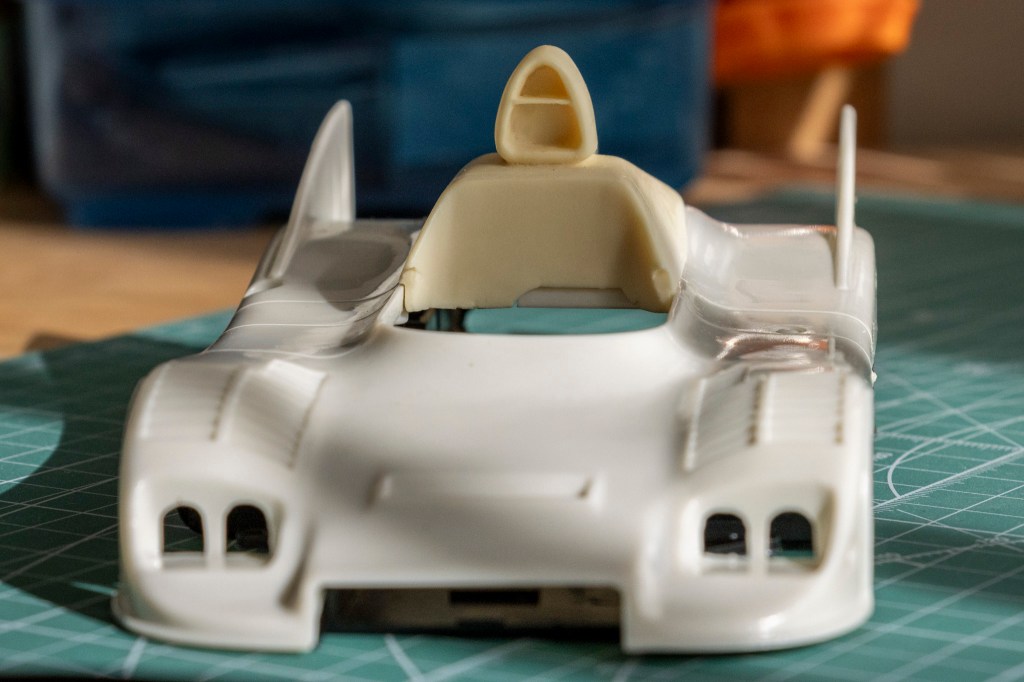
Though the airbox sits well on top of the Mitsuwa kit.
Now, time for the other 936s. Let’s start with the two 936/77s.
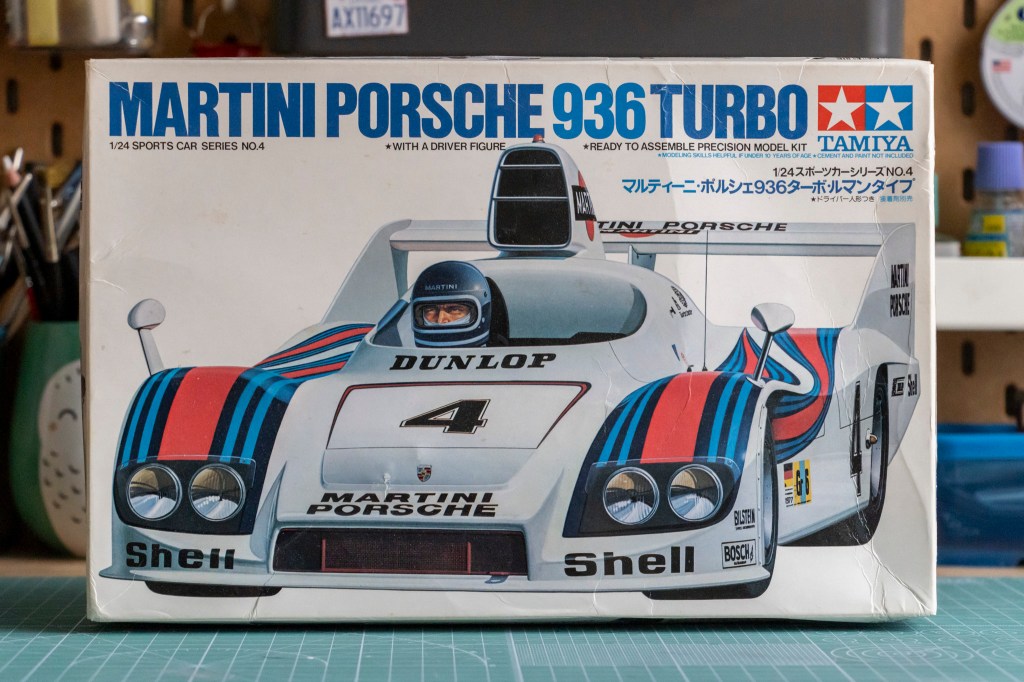
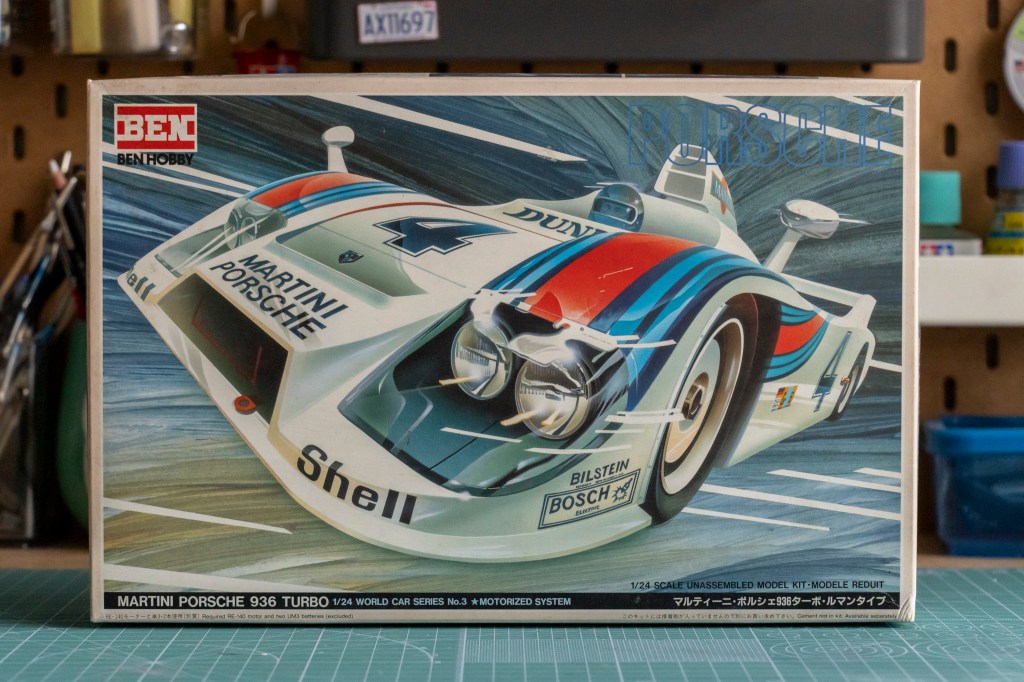
These are two identical 936/77s. Yep, BEN Hobby and Tamiya used the exact same mould for their 936/77s.
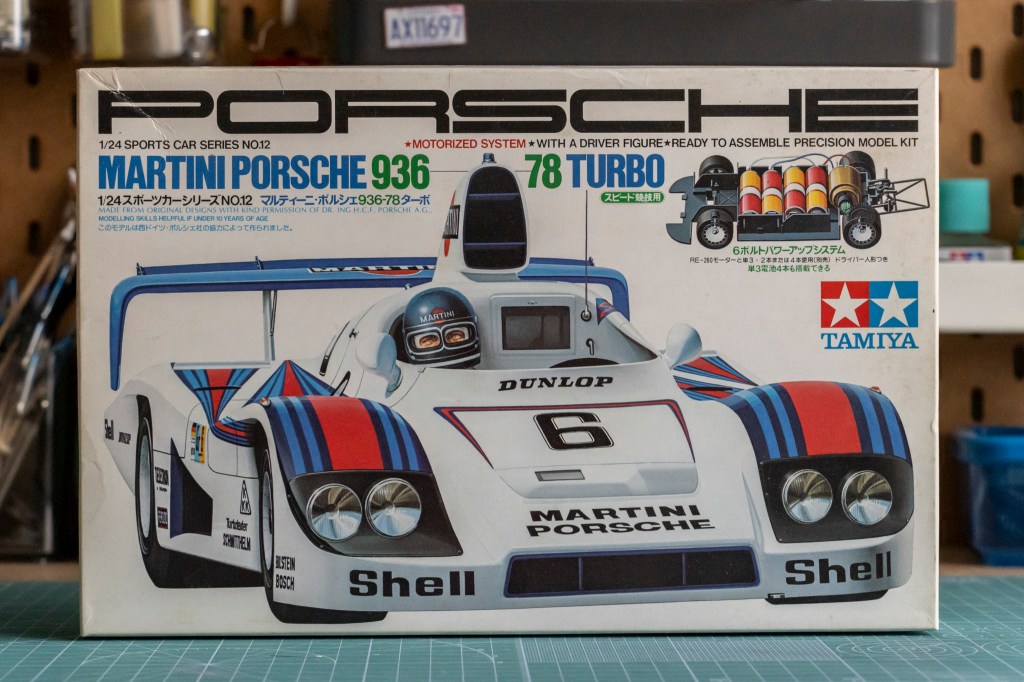
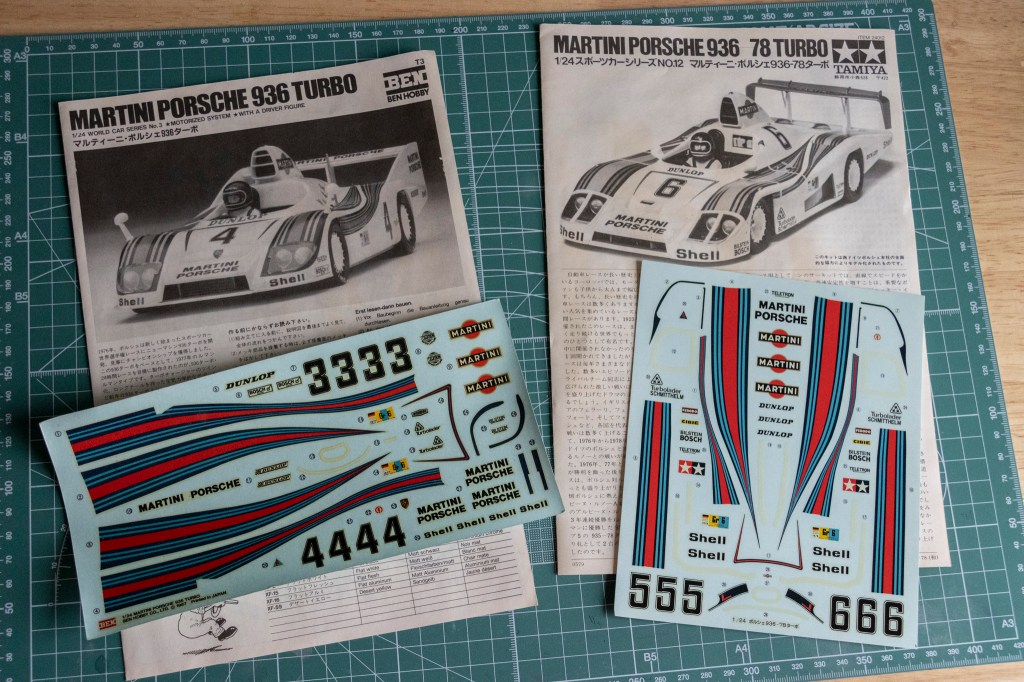
Instruction manuals and decals. Decals are no longer usable anymore.
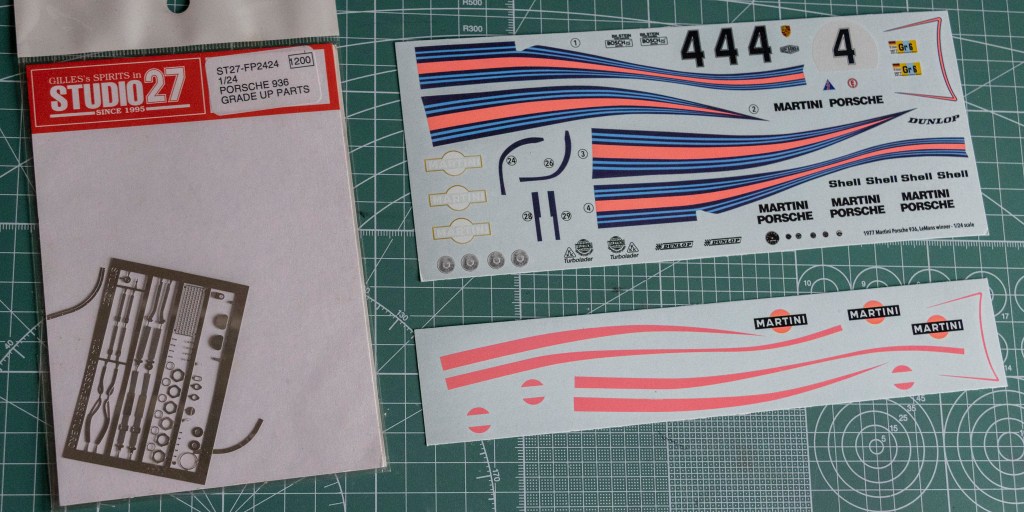
Fortunately, quite a few aftermarket vendors make decals for 936/76, the many versions of 936/77, 936/78, and even 936/81. I got my 936/77 decal set from Indycals. See the pink overlays? Indycals refer to them as their neon-printing technology. Studio 27 not only makes various decals for these cars but also offers upgrade parts – like this simple 936/77 upgrade set, which includes the wheel arch flaps Tamiya missed in their kit.
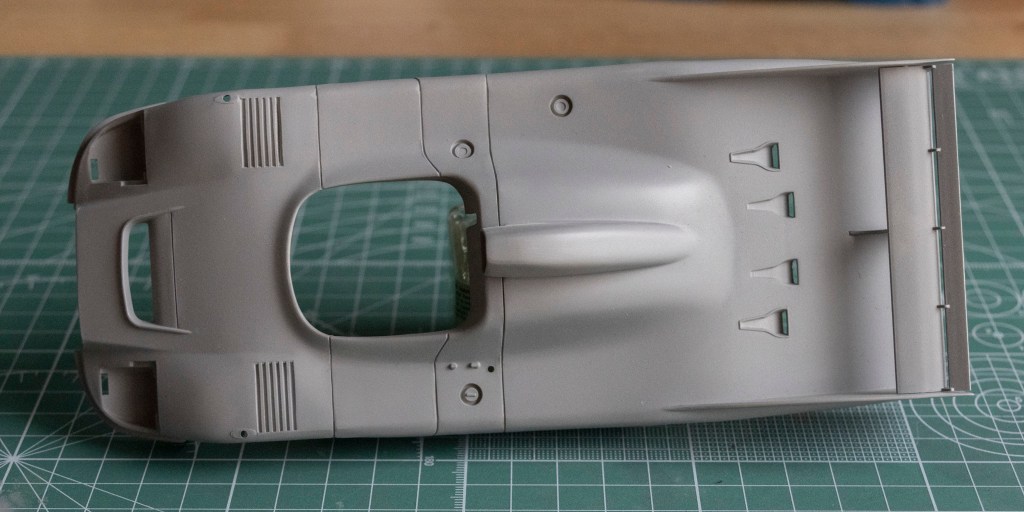
Let’s start with the body. Here I have cleaned up the body and airbrushed a layer of Mr. Hobby’s Aqueous Surfacer, grit level 1000, a water-based primer, which I found pretty easy to use – smooth finish and little to no odor.
Parts I have attached to the body includes the airbox intake; rear wing centre support, and of course, the one-piece rear wing.
You can tell that Tamiya/BEN’s oil caps are better moulded than Mitsuwa’s 936. The front wheel arch vents on the ’77 936 are not hollowed out, you might want a sharp modelling knife and saw for the ultimate presentation.
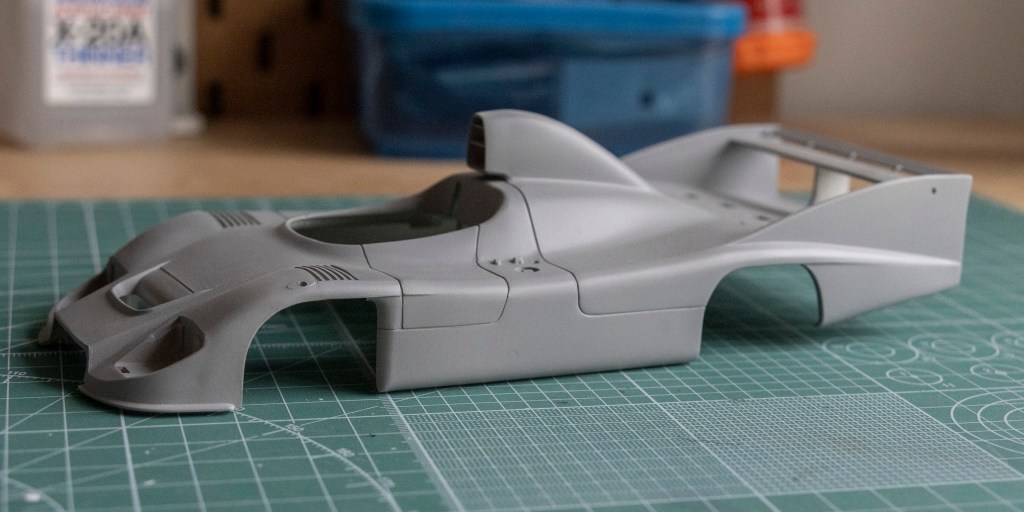
The 936/77 is my favourite 936. Such a beautiful streamlined body. Looks like a dolphin to me.
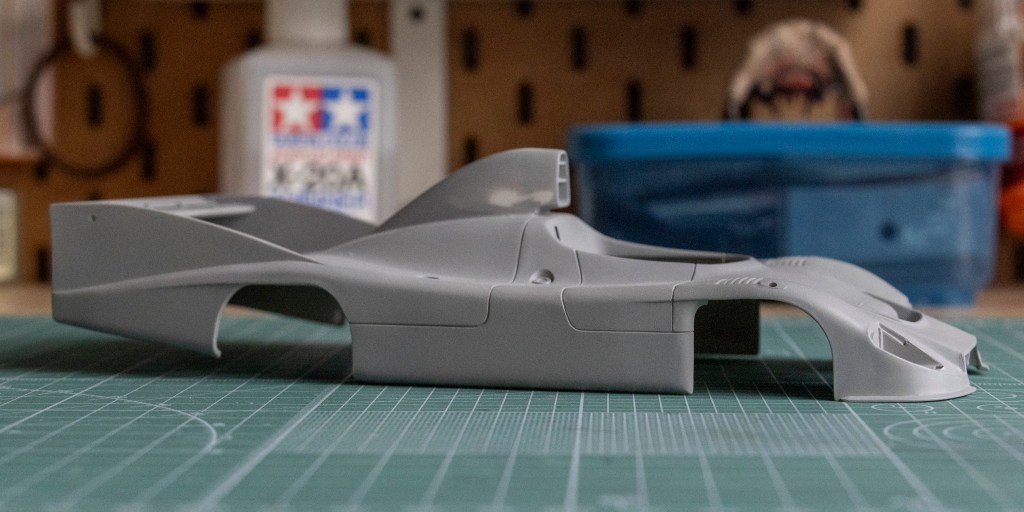
My favourite angle is the side view. Follow the high airbox, and the line starts to decline. At that exact same point, the rear wing section starts to rise until the tail, like a pair of shark fins. Tamiya and BEN did not include the front wheel flaps as Mitsuwa did, alas—what a shame.
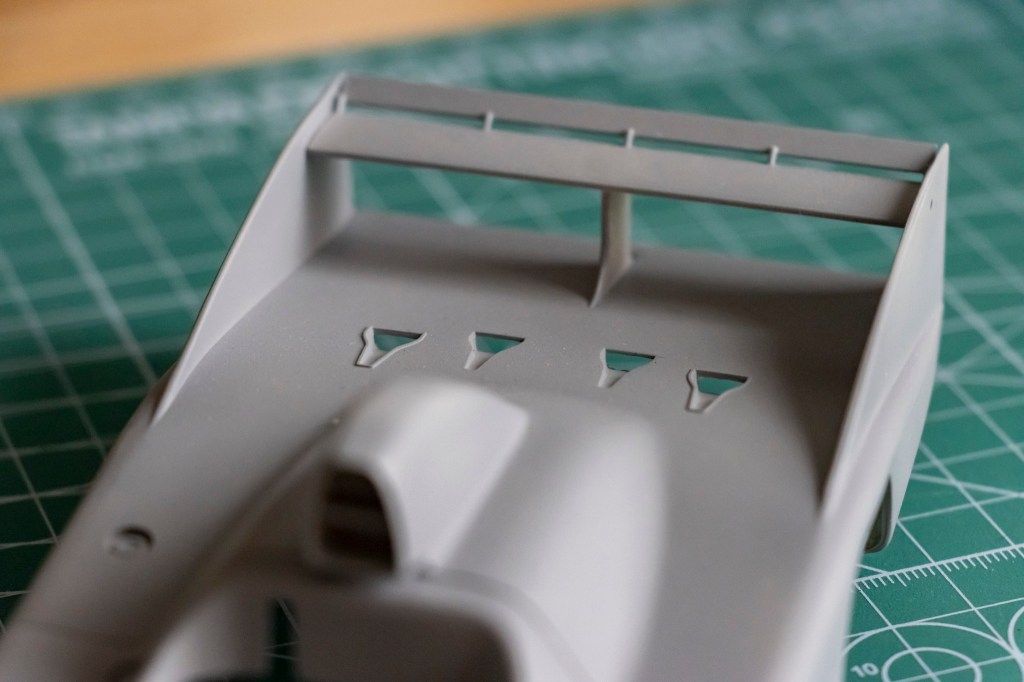
Some lovely NACA ducts are located near the tail section.

Again, for a kit – a motorized kit – originating from 1978, this one surely has a good look.
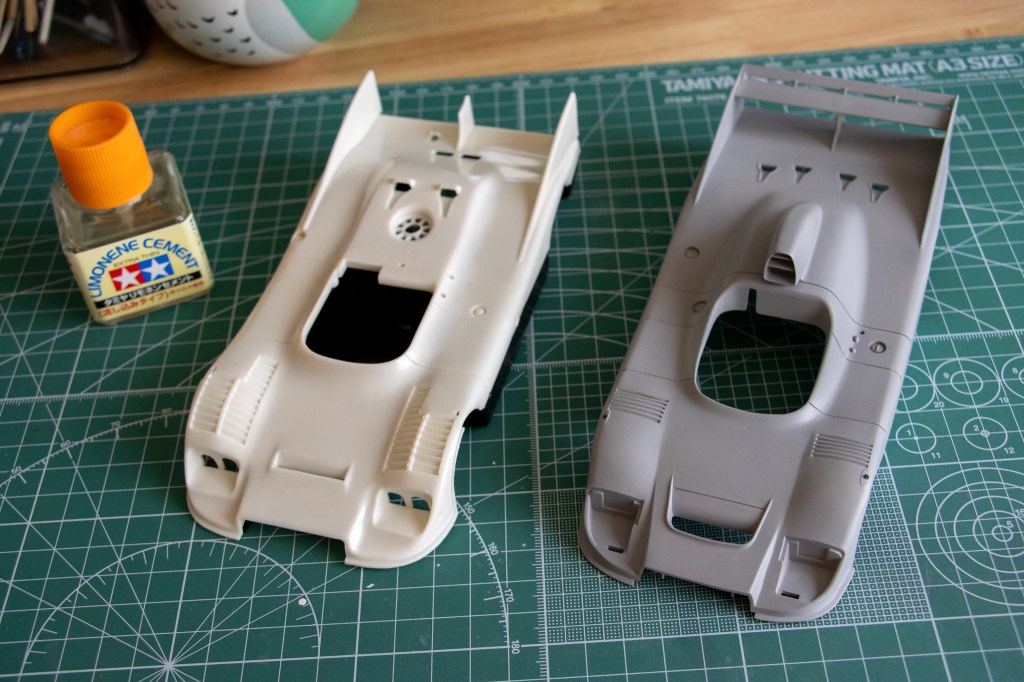
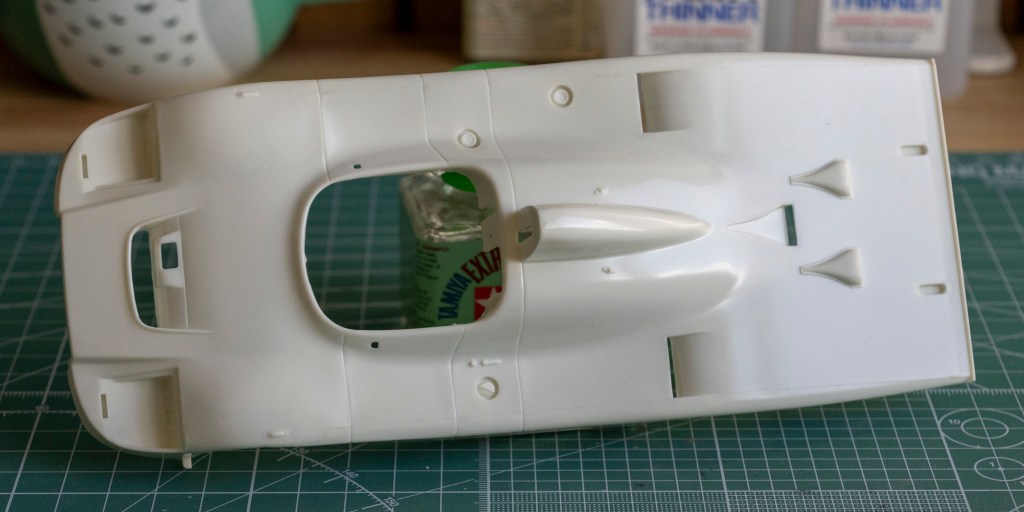
The ’77 936 had a longer tail than the one ran in the previous year.
The 936 that did not win at Le Mans when it debuted is the 936/78. Can you identify how many differences between the ’78 and the ’77?
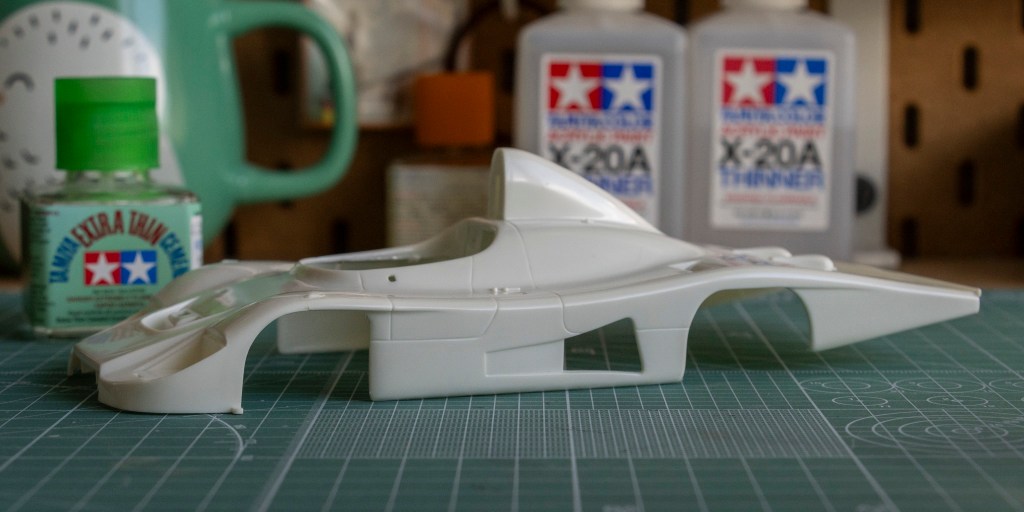
Well, there are quite a few very obvious upgrades. First, side air intakes were added. You must also notice the completely different rear wing section.

On this 936/78 body, you will find some of these plate lights. They are used in races to make sure the car can be easily identified.
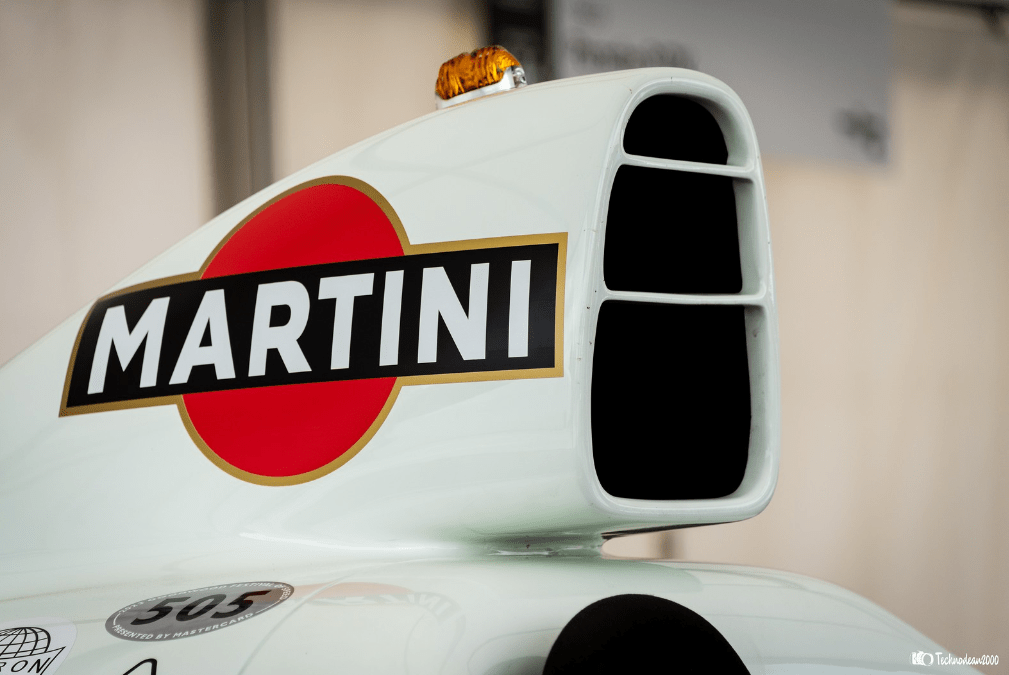
(Photo Credit: technodean2000)
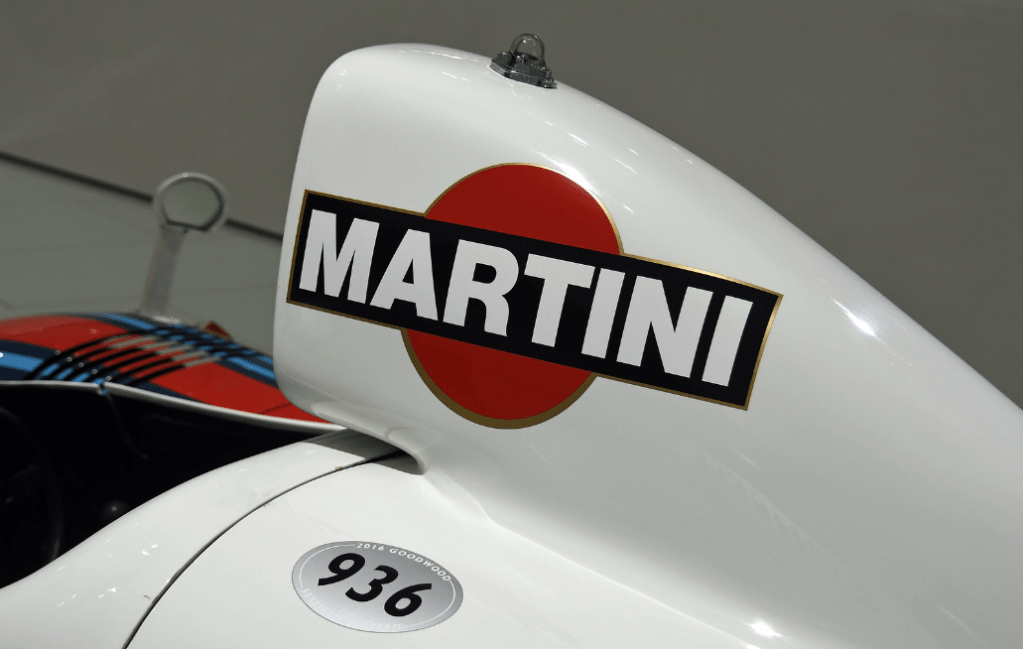
(Photo Credit: baffalie)
This little detail is missing from Mitsuwa’s 936. You may be wondering – there is also none of them in the 936/77 body you have primered! That was because I intend to use aftermarket parts for these small lights.
Decalcas, for example, makes 3D-printed plate lights, which have a much more authentic look. As a perfectionist, I’m buying these.
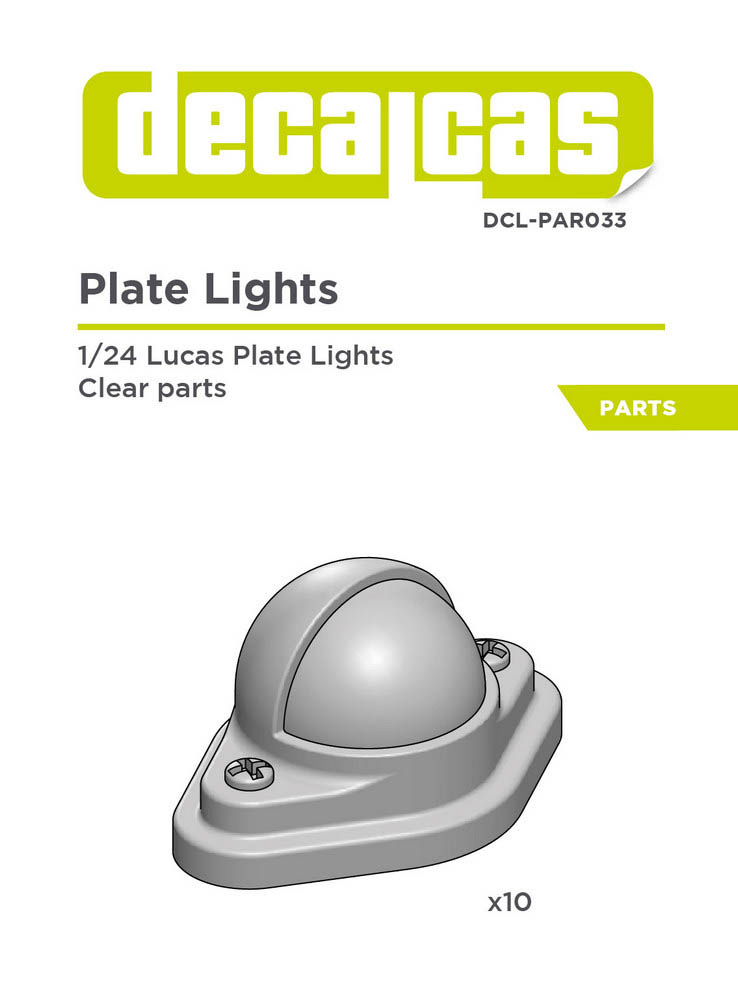
(Photo Credit: decalcas)
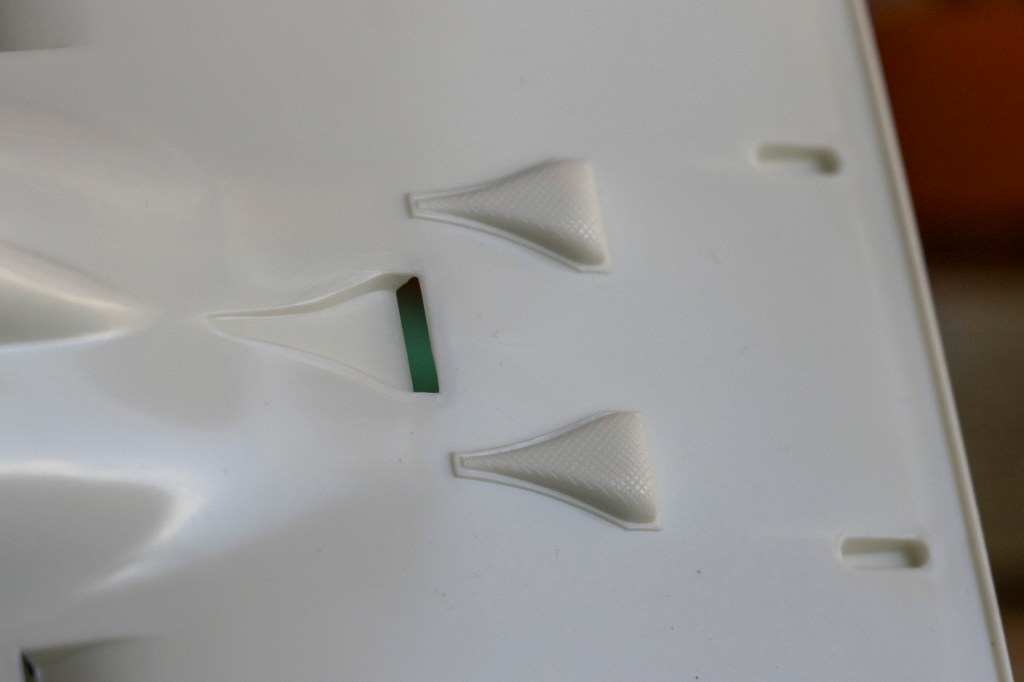
The two NACA ducts at the tail of the 936/78 are covered by metal mesh, which is reproduced as shown in the above picture. Not good enough? Then you need this –
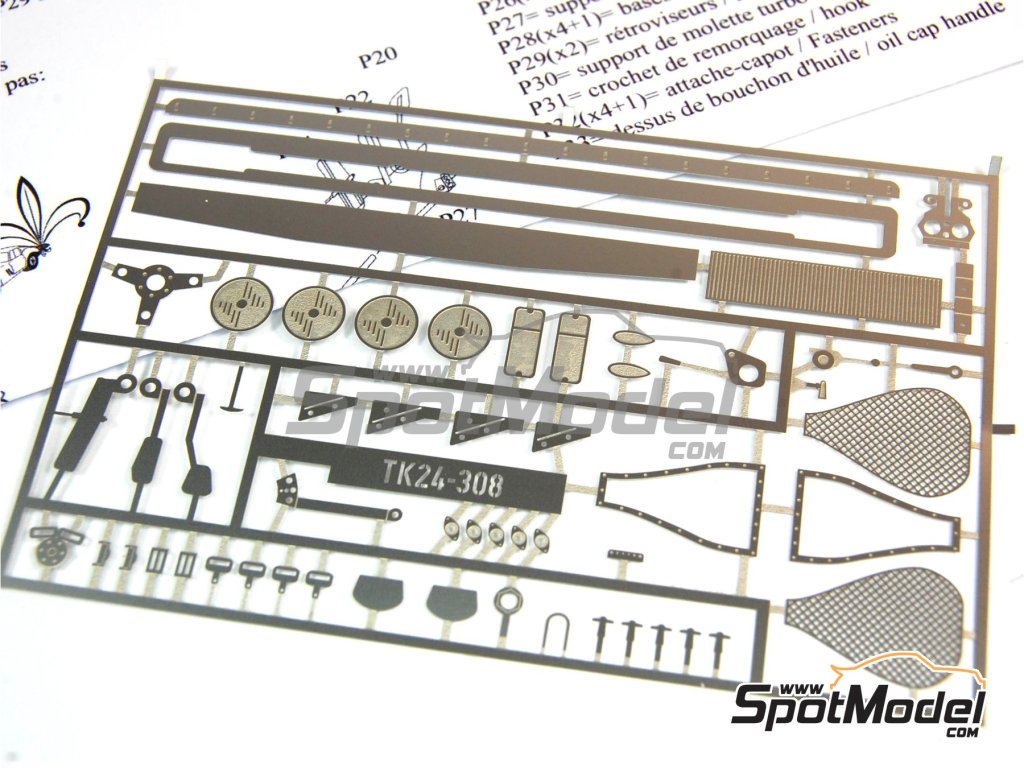
(Photo Credit: SpotModel)
Renaissance’s photo-etched upgrade set for Tamiya 1/24 936/78.

Similar to the 936/77, the airbox intake opening requires some filling work to eliminate the gap. I might be a bit to aggressive on sanding the top of the airbox here…
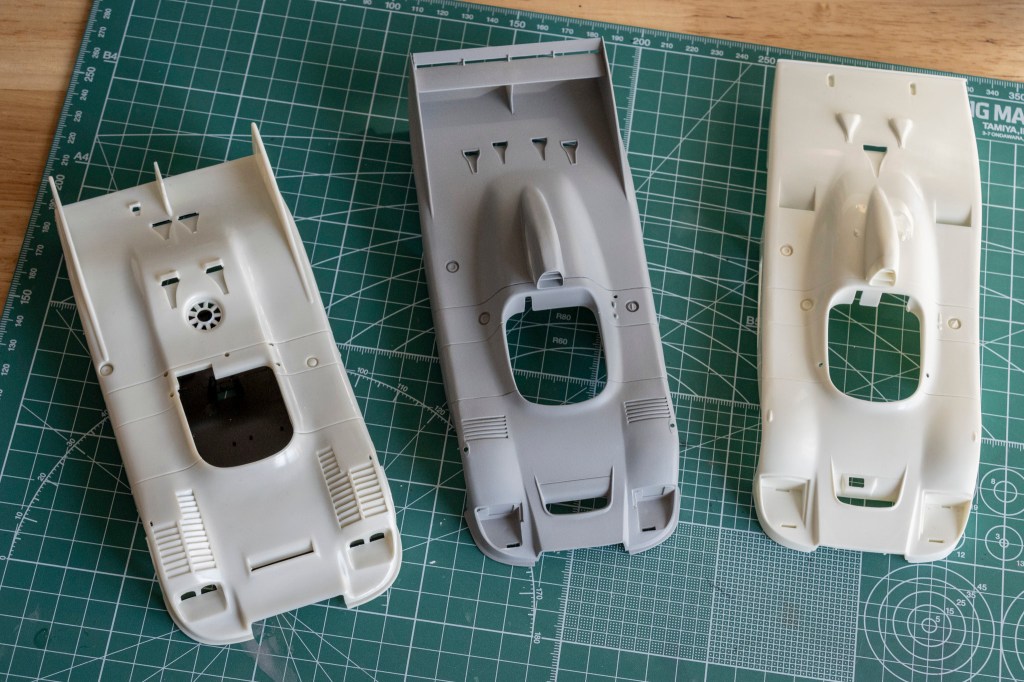
Finally, the three cars are in the same picture! Which one is your favourite?
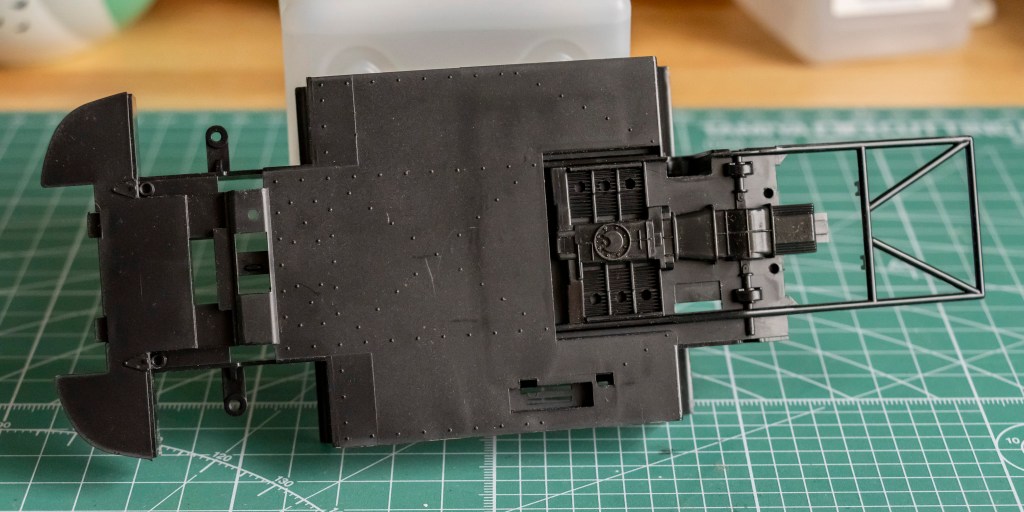
936/77 chassis.
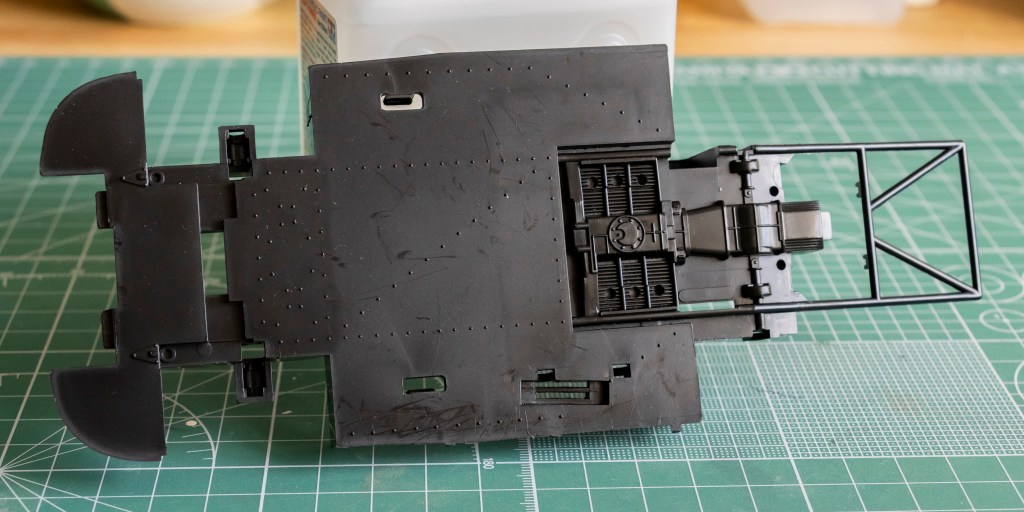
936/78 chassis.
The design of these motorized kits is basically a combination of a good-looking body and a simple but working chassis. This pair, 936/77 and 936/78 share a highly similar chassis.
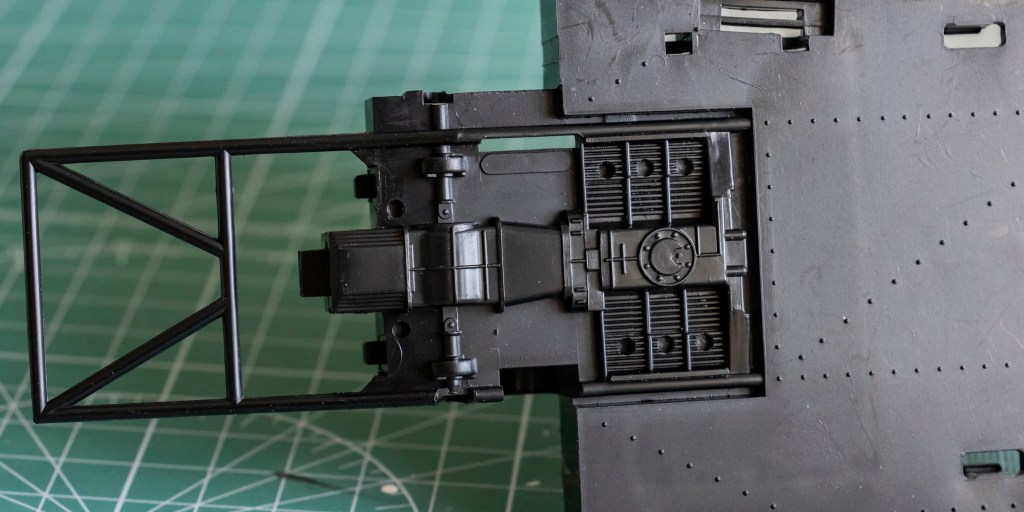
In addition, the level of detail here is better than Mitsuwa’s offer.
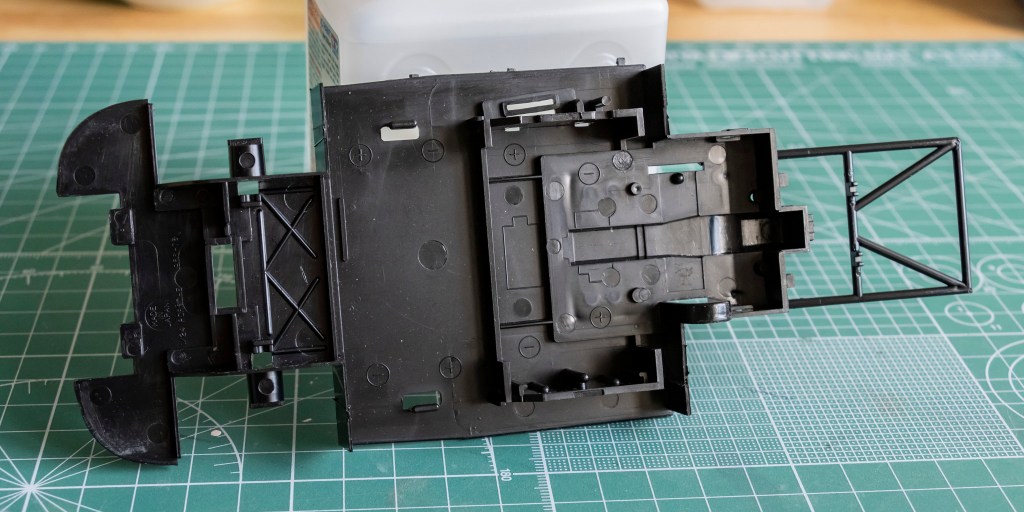
Nothing much to see on the other side. Plenty of empty space reserved for motor and batteries.

A sprue from 936/77.
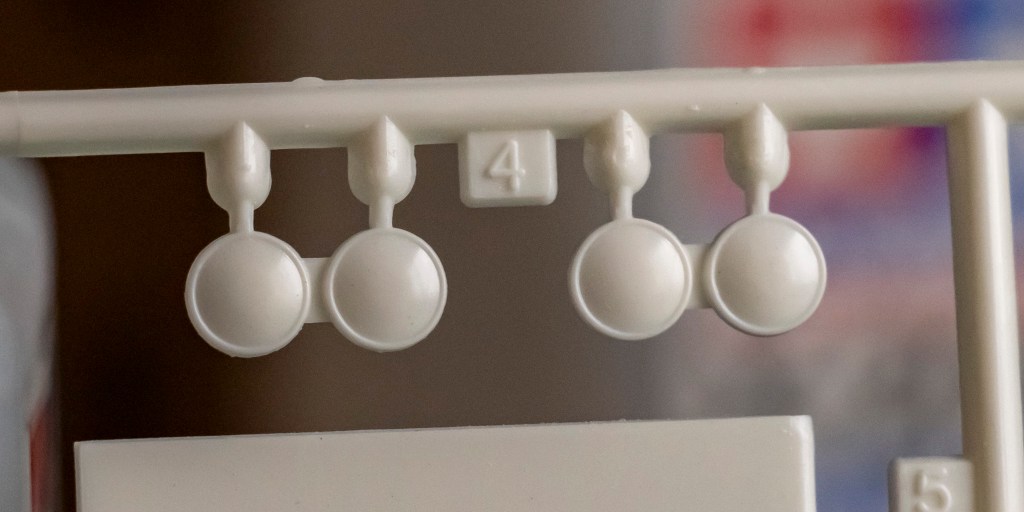
Headlight units. Just round plates? Huh? No transparent parts? Mitsuwa did better!
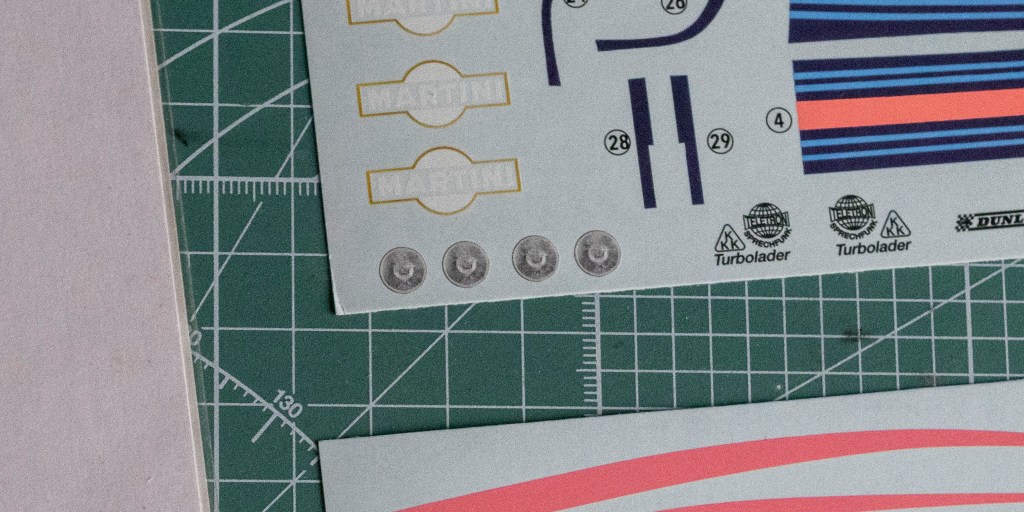
No wonder why Indycals include four lens decals in their offers.
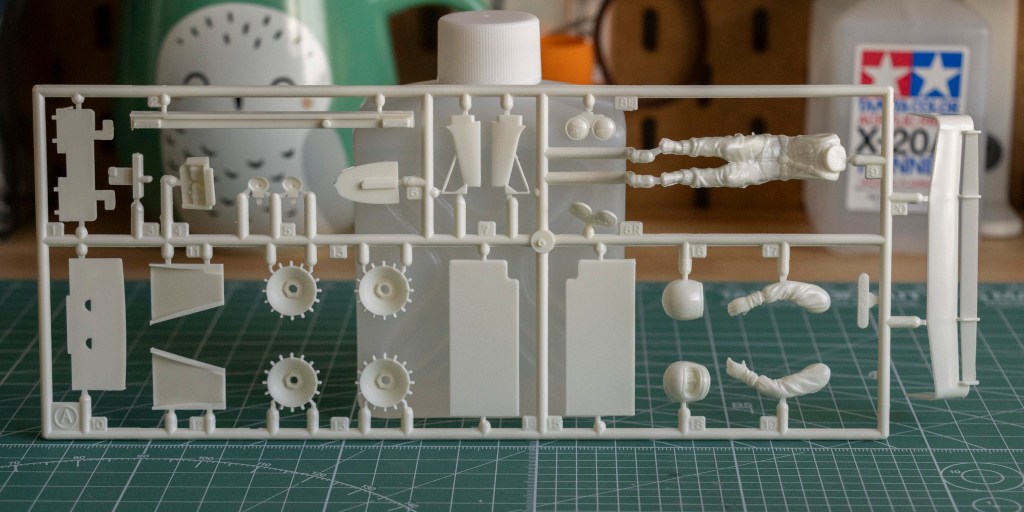
A sprue from Tamiya’s 936/78.
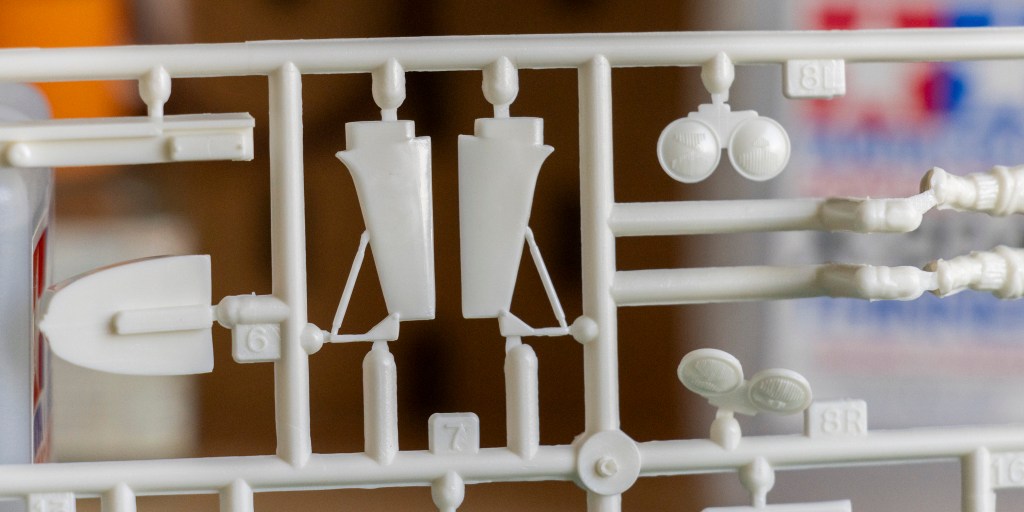
936/78 features a different rear wing mount.
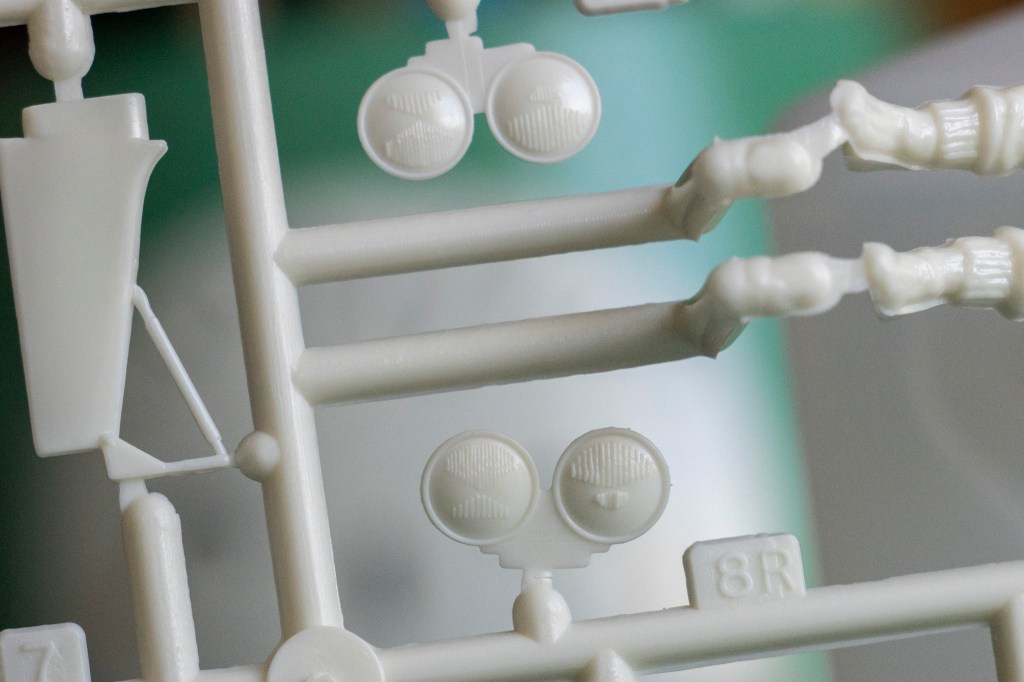
Headlight units finally got some detail treatments. Better than nothing – still no transparent parts.

These are some CIBIĒ lights.
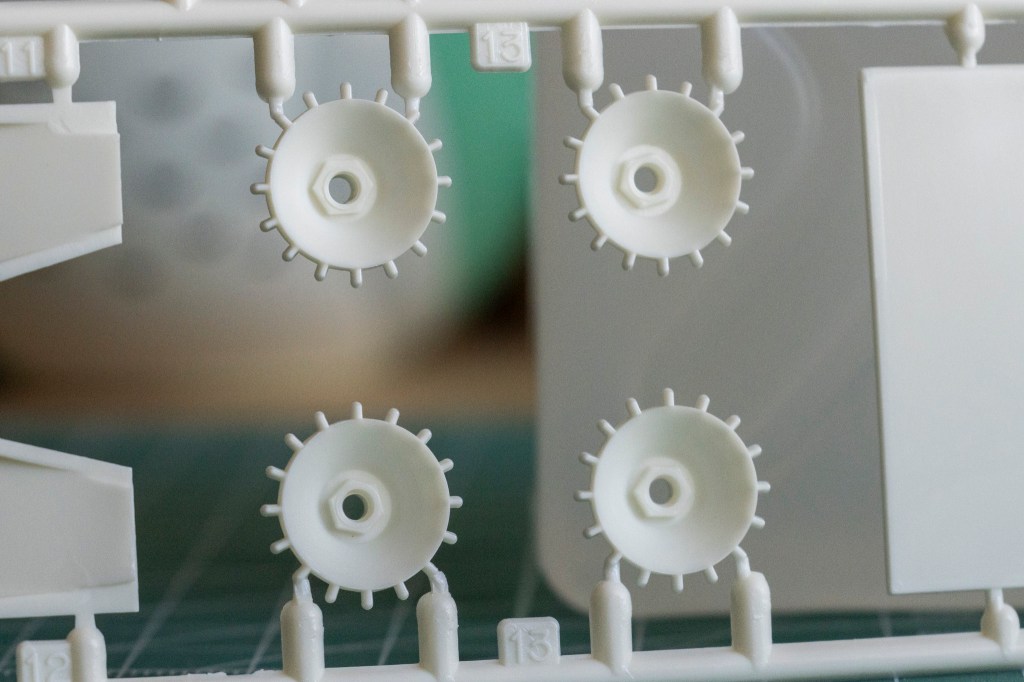
The blades on the aero discs are awfully thick. They ain’t no photo-etched parts, for sure!
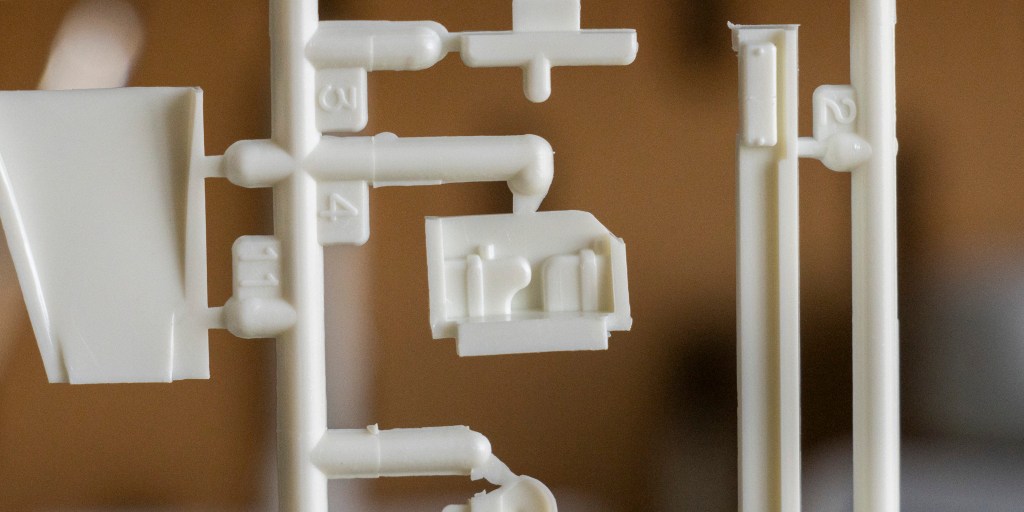
The little window besides driver’s head features a quick access to various fiuld tanks. Here, Tamiya offers a one-piece-everything-included part but no clear part for the actual window. It’s not gonna be hardest thing to find a fairly thin and small transparent plastic sheet around.
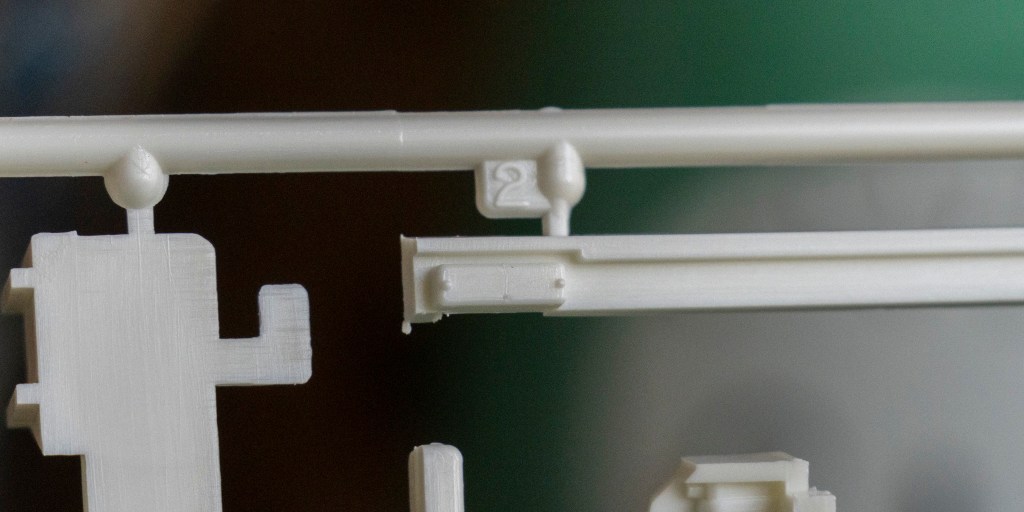
No transparent taillight, either. Simple kit, not so simple paint job…
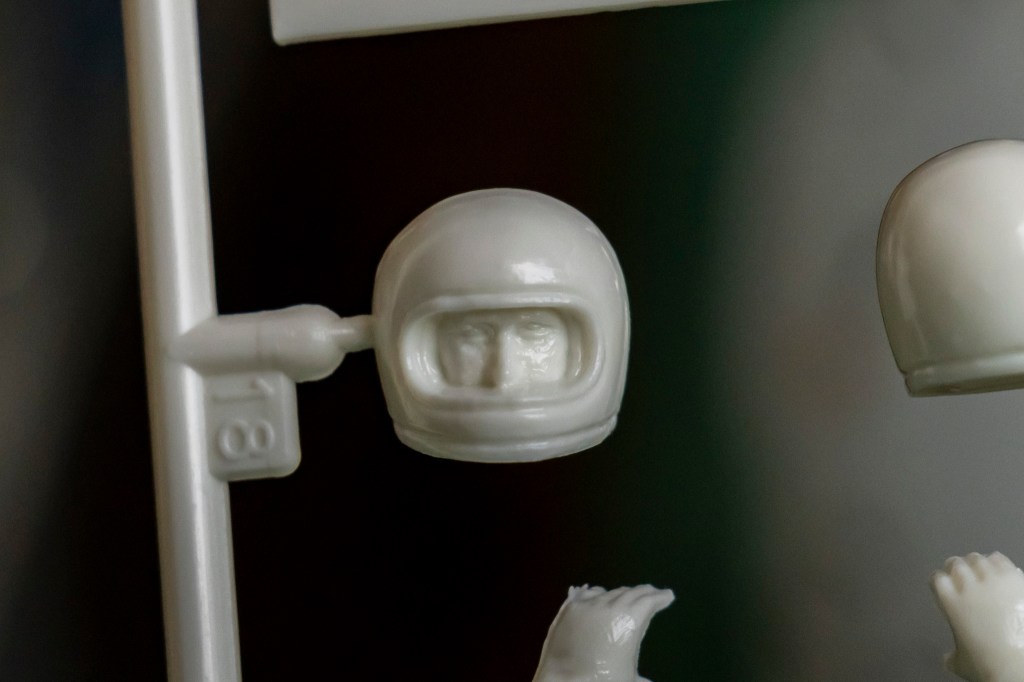
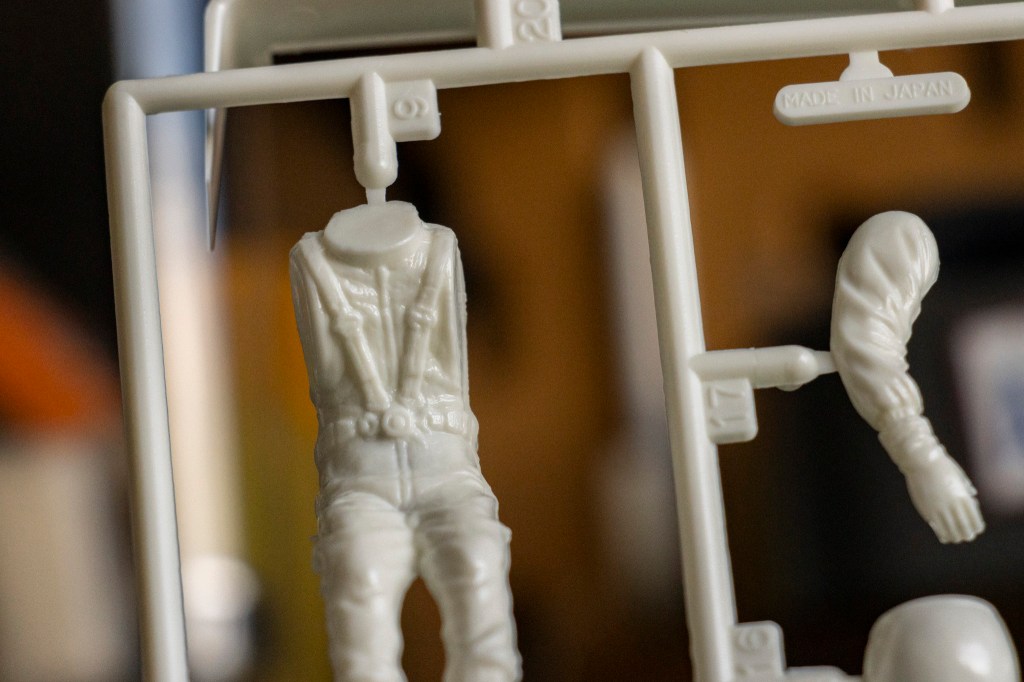
Both kits – including BEN Hobby’s 936/77 – all come with a racing figure. No figures in the Mitsuwa 936.

Tamiya/BEN Hobby’s Porsche 936/77 and 936/78 share the exact same B sprue. Very reviewer-friendly, huh?
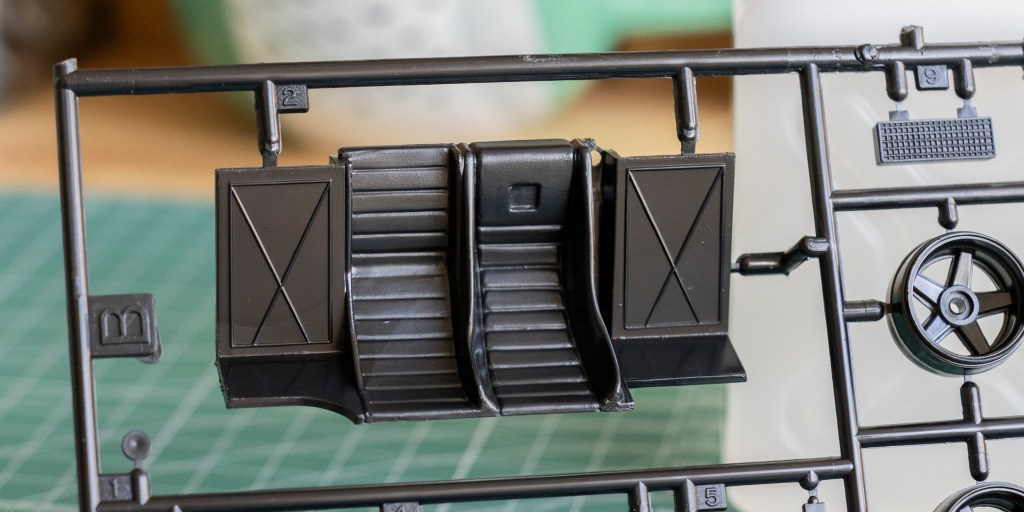
The seats. Fairly simple moulding here. Like the Mitsuwa kit, the driver’s seat is free from mould-on seatbelts, a practice you will find not so uncommon on vintage kits. This is preferred (by me) – just add aftermarket seatbelt sets, and you are good to go!
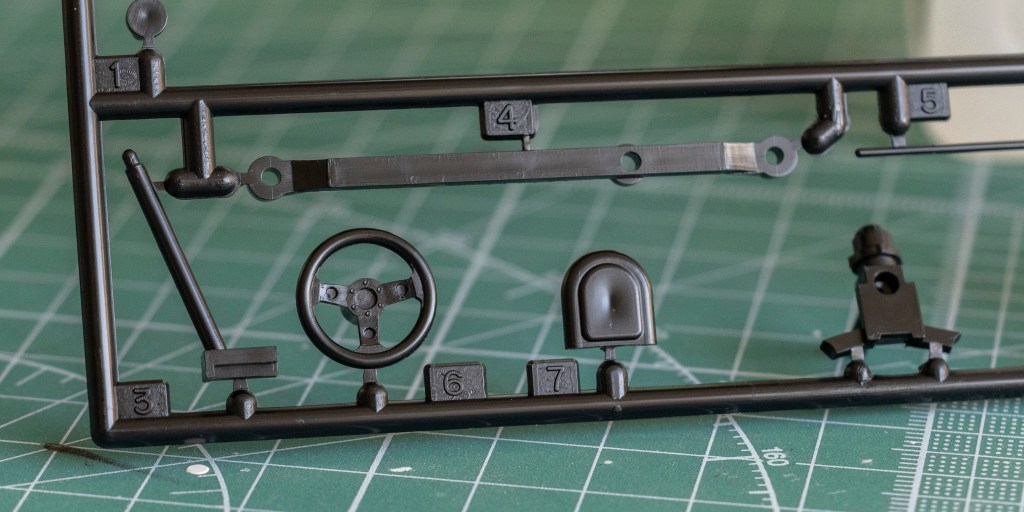
Got some rivets on the steering wheel. Not bad! There seems to be a shrink on the head pad, gotta fix that before airbrushing it into matt black. Easy fix!
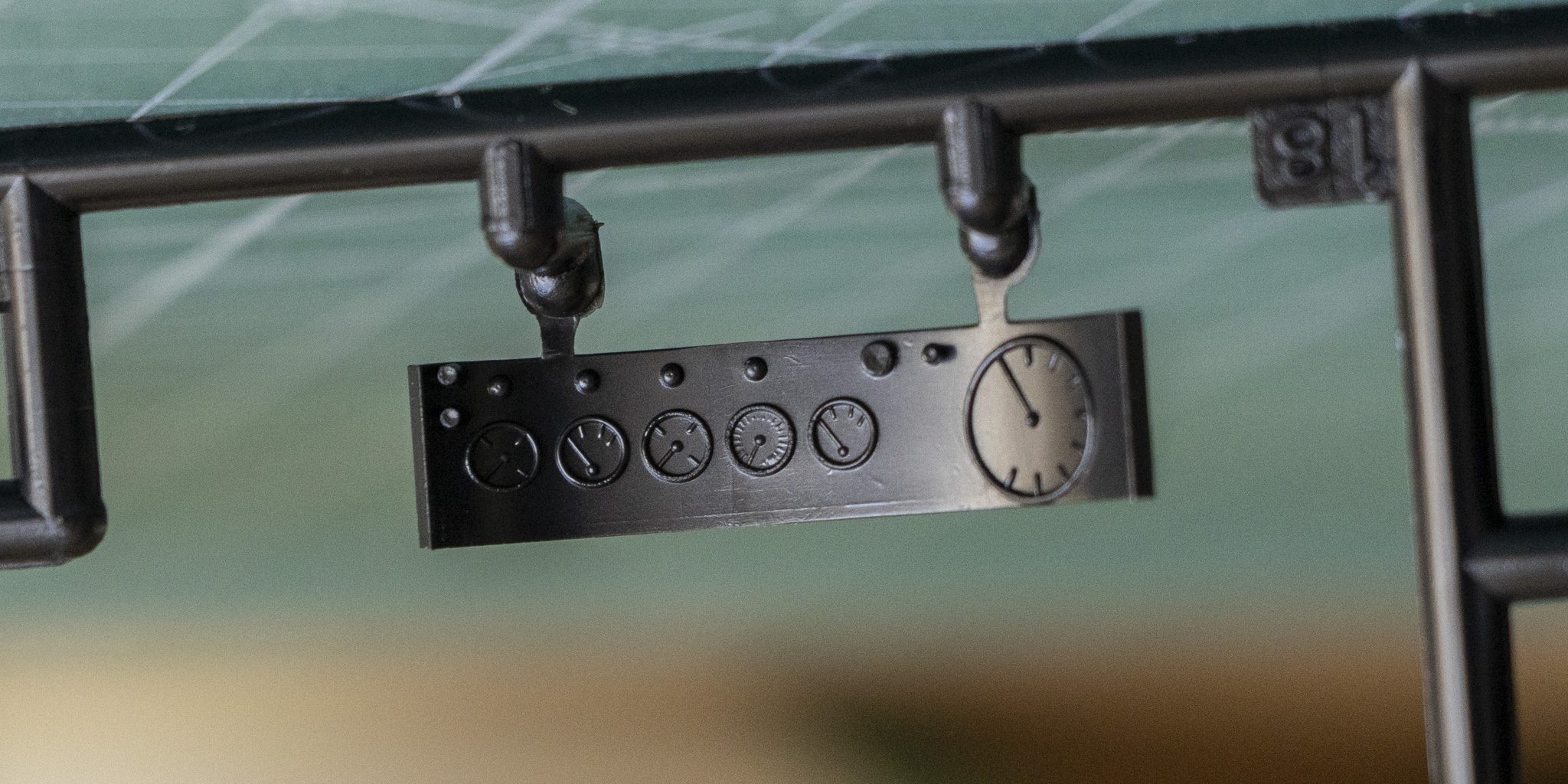
This photo has to be rotated so you can see exactly what the drivers of 936 see. Again, 45+ year old kit, simple interior depiction. The tachometer is placed that way to help the driver read the RPM upon a quick glance. No decals are provided – minus 1 point.

Wheels are pretty basic, nothing much to say. Unless you can get a set of the BBS wheels you might just have to use these kit-supply wheels…On a bright note, you will get four aero discs to cover these wheels, hence, you don’t get to see what is behind those white discs.
I am sure you’ve seen the second turbo, correct?
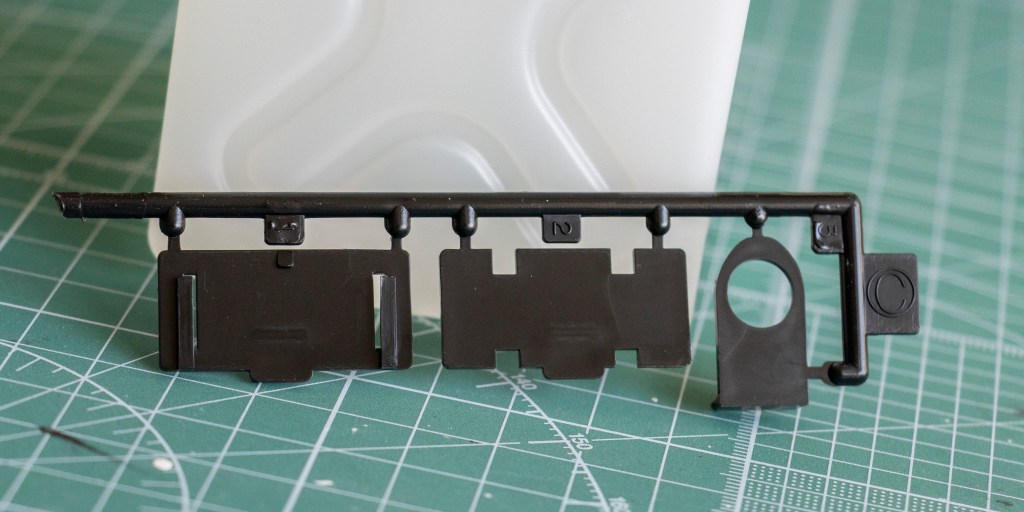
Depending on which re-release you get, you might receive a little C sprue for the motorized version only parts.
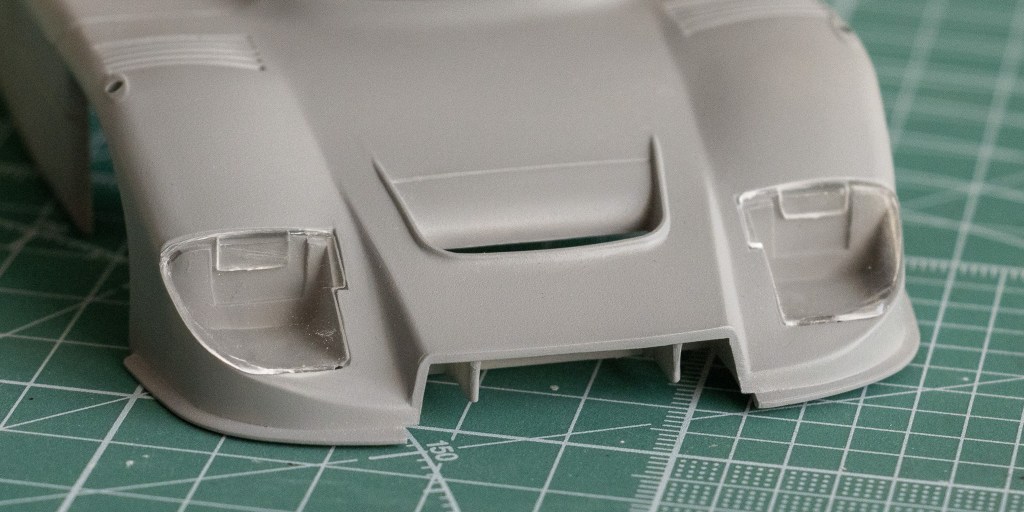
Both kits have a small clear sprue that each contains only two parts – the two headlight covers. The fit is okay (meaning not the best).
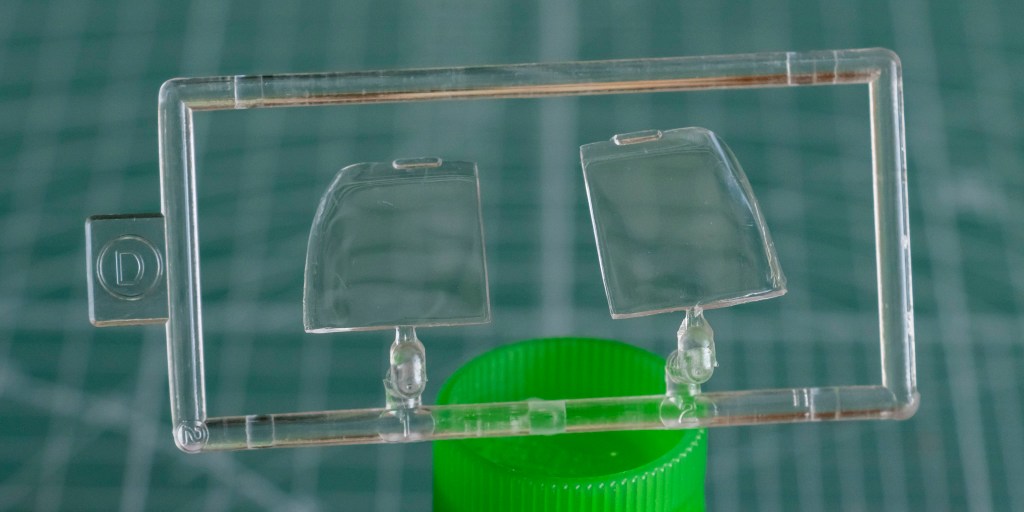
936/78 features a set of different covers, catering to the change of the front body shape.
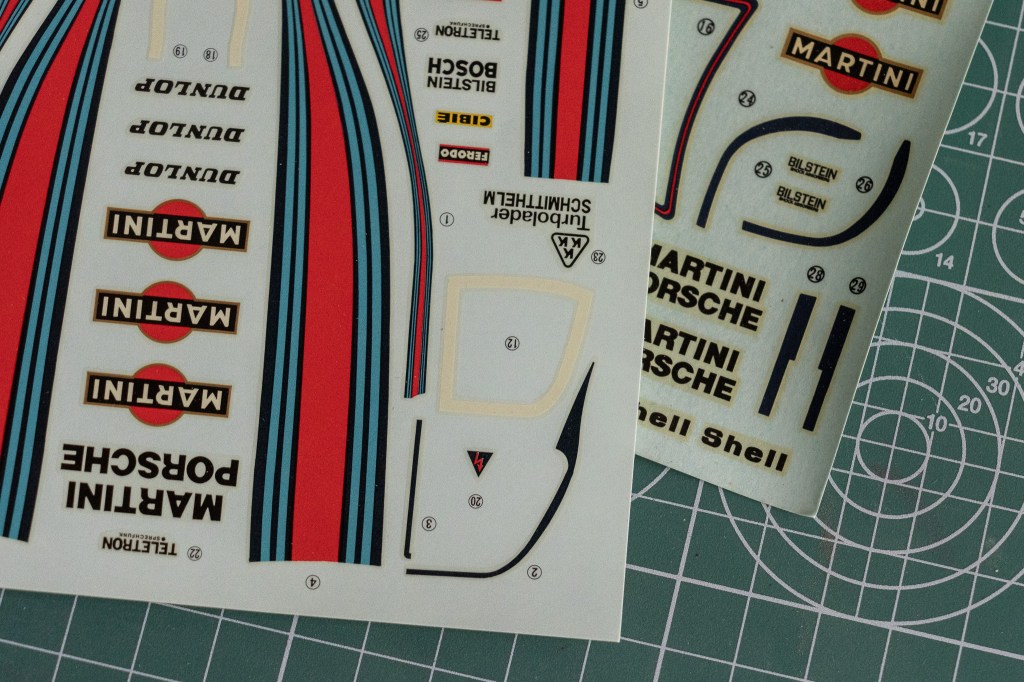
If you are really not happy with those gaps – try sealing them with decals provided in the 936/78 kit. As for the 936/77, I suggest using painted thin tapes.
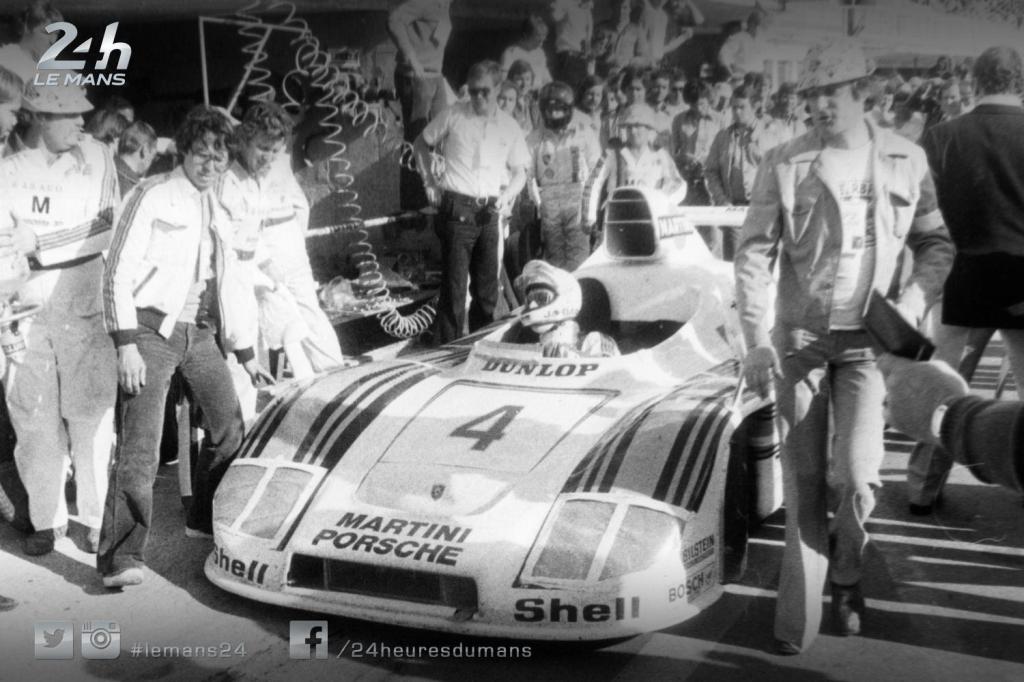
(Photo Credit: 24H LE MANS)
Headlights are usually sealed in early races to avoid damage to the glass.
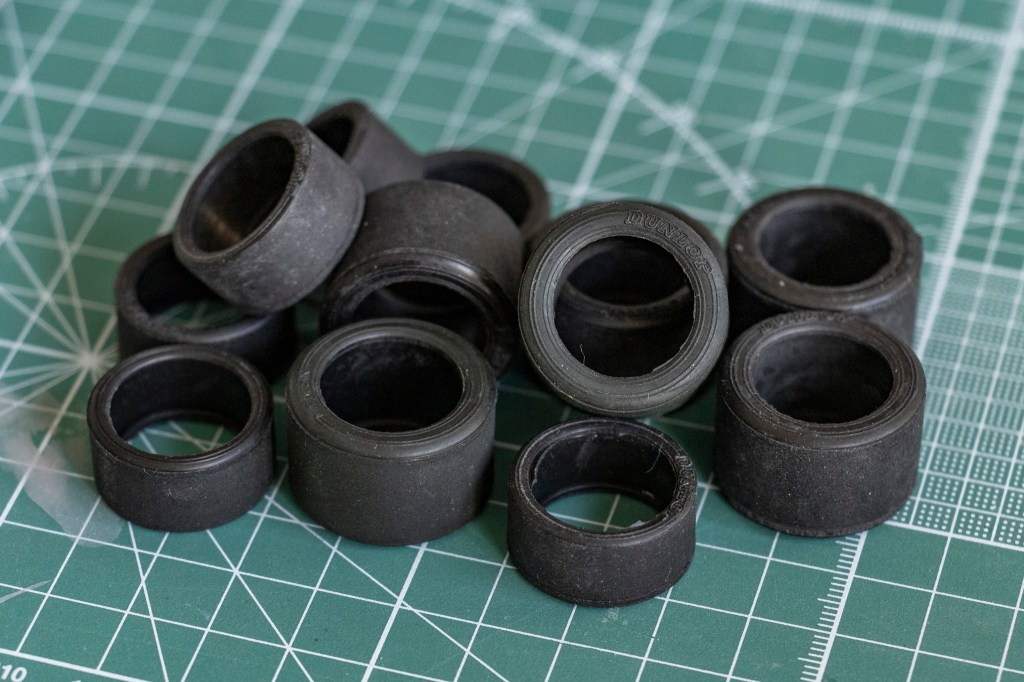
Tyres! Lots of tyres.
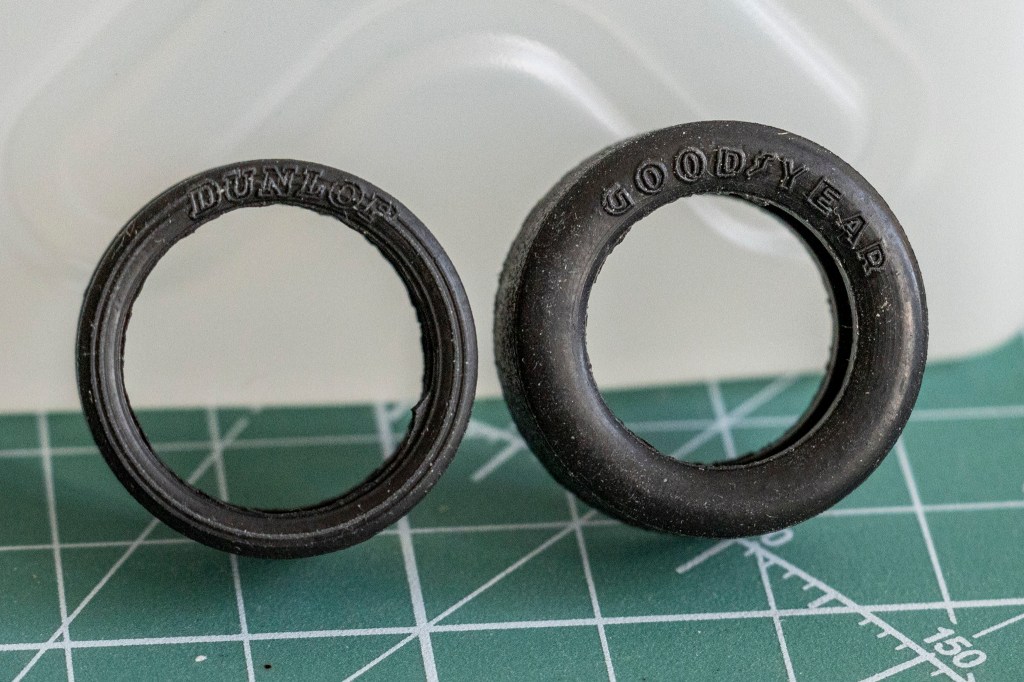
Front tire comparison – Left: Tamiya/Ben; Right: Mitsuwa.
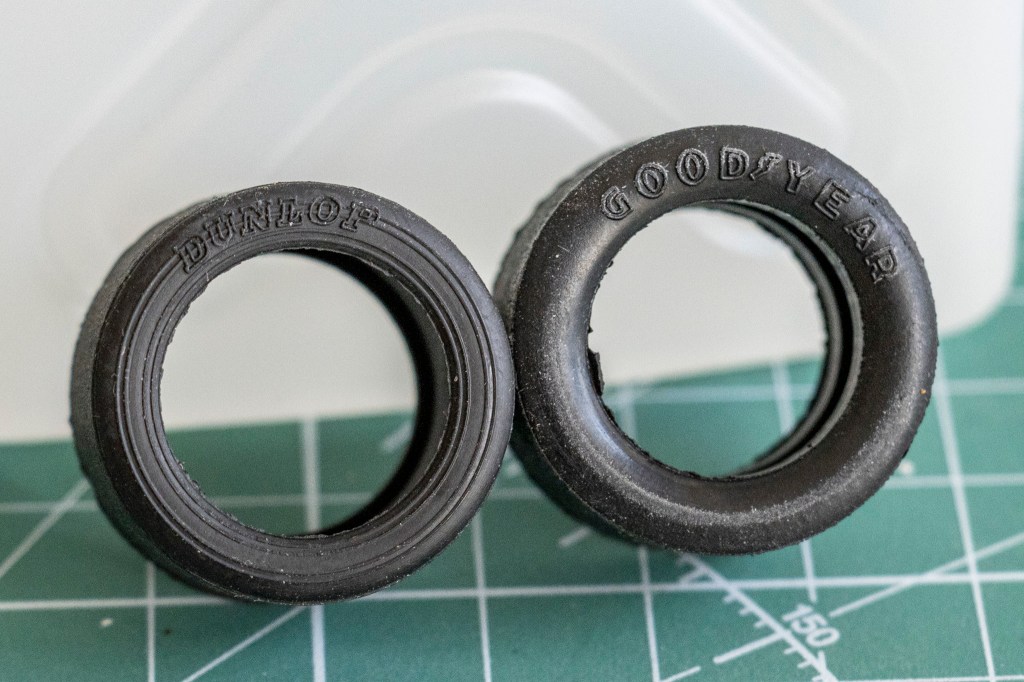
Rear tire comparison – Left: Tamiya/Ben; Right: Mitsuwa.
The size difference is obvious. I am not sure if this is because Mitsuwa made it clear that their tires are designed for motorized car competition.
So that’s pretty much everything about these 936 kits! Despite simple chassis designed for motorization, all these kits provide good-looking bodies that replicate the beauty of the group 6 racers. Plus, you really don’t have many choices for the 936s in this scale.
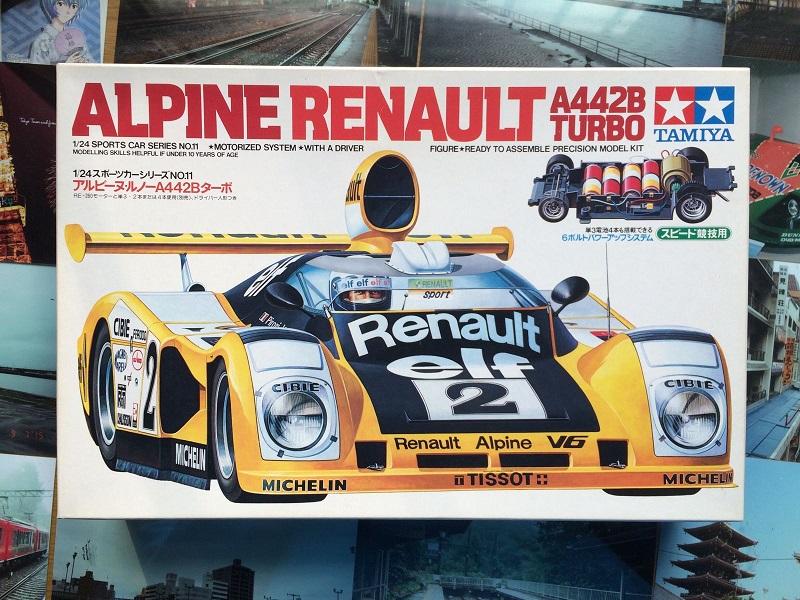
Let’s talk about 936’s biggest rival next time, shall we?
 Larry's Scale Model World
Leave a comment